 EN
EN

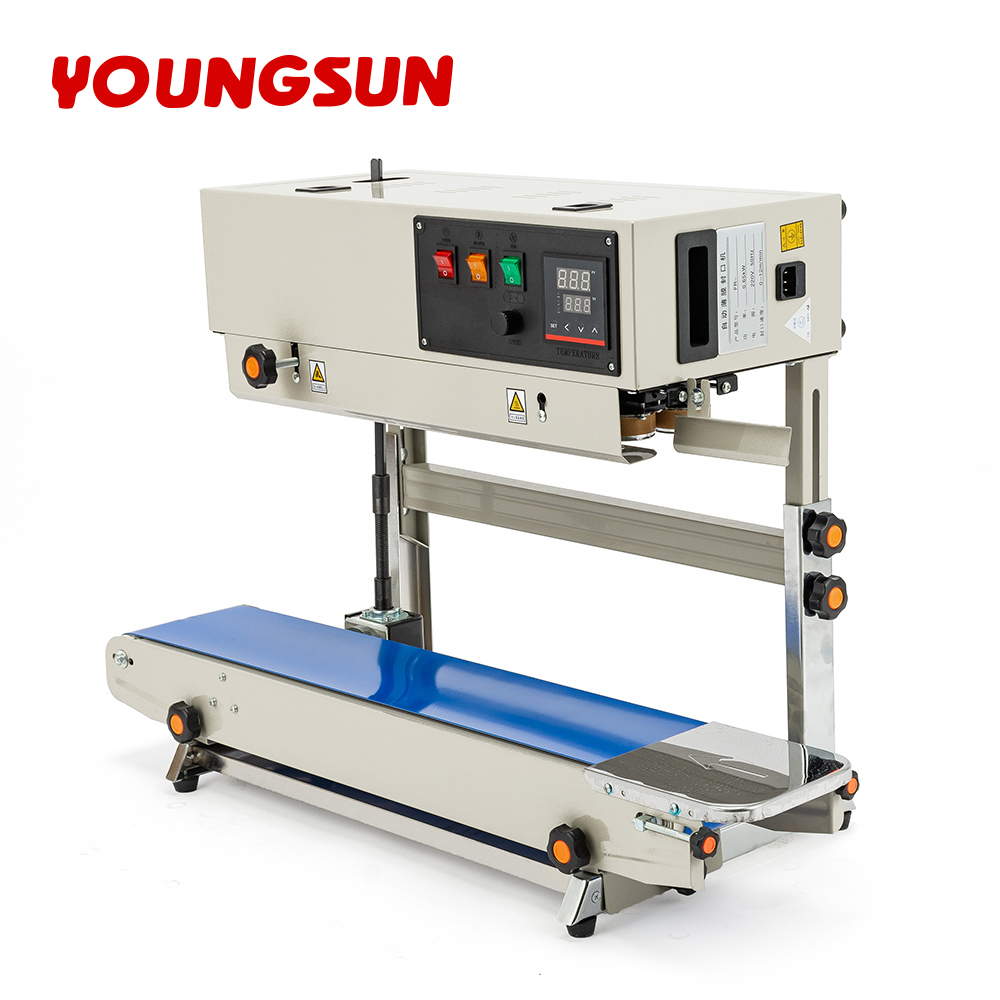
What Are the Key Parts of a Continuous Band Sealer?
A packaging line manager watched a continuous band sealer run smoothly for eight hours straight, sealing thousands of bags without a single failure. The machine seemed simple—bags went in one end and came out sealed at the other. But inside that machine, a coordinated system of belts, heaters, rollers, and controls worked together to create consistent, airtight seals.
Understanding the key parts of a continuous band sealer is not just technical knowledge—it is practical knowledge. It helps operators troubleshoot problems, maintenance teams keep machines running, and purchasing managers make informed buying decisions.
The Conveyor Belt System
The conveyor belt is the foundation of a continuous band sealer. It transports bags through the sealing zone at a controlled speed, ensuring consistent exposure to heat and pressure.
Most band sealers use a Teflon-coated belt or a similar heat-resistant material. The Teflon coating prevents the packaging film from sticking to the belt during sealing. The belt must remain clean and properly tensioned to maintain smooth operation.
Some machines have separate upper and lower conveyor belts that grip the bag from both sides, providing stable transport through the sealing zone. This dual-belt design is especially important for vertical band sealers handling stand-up pouches.
The Heating Elements and Sealing Bands
The heating element generates the heat that melts the thermoplastic layer of the packaging film. In a continuous band sealer, the heating element is typically a metal rod or strip that runs the length of the sealing zone.
The sealing band—often a Teflon-coated belt or a separate heated band—transfers heat from the element to the packaging film. The band must maintain consistent temperature across its entire surface to create uniform seals. Temperature is controlled by a thermostat or electronic temperature controller, which cycles power to the heating element to maintain the set point.
Dual heating bands are common on higher-end models, providing more even heat distribution and faster sealing speeds.
The Pressure Rollers
Pressure rollers apply force to the heated film, pressing the layers together to form a seal. The pressure must be consistent across the entire seal width—uneven pressure creates weak spots where the seal can fail.
Rollers are typically made of heat-resistant rubber or silicone. Over time, they can become glazed or develop flat spots, reducing their effectiveness. Regular inspection and replacement of pressure rollers are essential for maintaining seal quality.
Some machines have adjustable pressure settings, allowing operators to match the pressure to the film thickness and material.
The Cooling Zone
After the sealing bands apply heat and pressure, the sealed area needs to cool before the bag exits the machine. The cooling zone—typically a set of cooling bars or a passive cooling section—allows the seal to set properly.
Without adequate cooling, seals can warp, crack, or loosen. Machines with longer cooling zones or active cooling (such as fans or water-cooled plates) produce more reliable seals, especially at high speeds.
The Temperature Control System
The temperature control system monitors and regulates the sealing temperature. It consists of:
- Temperature sensor (thermocouple or RTD): Measures the actual temperature of the heating element
- Temperature controller: Compares the measured temperature to the set point and adjusts power to the heating element
- Solid-state relay or contactor: Switches power to the heating element based on the controller's signal
Modern band sealers use digital temperature controllers with PID (proportional-integral-derivative) algorithms for precise temperature control.
The Speed Control System
Sealing speed—the rate at which the conveyor belt moves—affects the amount of heat applied to the film. Faster speeds require higher temperatures to achieve the same seal quality; slower speeds may overheat the film.
Most band sealers have variable speed control, allowing operators to match the speed to the film material and thickness. Some advanced machines have synchronized speed and temperature controls that automatically adjust both parameters.
The Frame and Structural Components
The frame provides the structural integrity that keeps all components aligned. A rigid frame prevents vibration and misalignment that can affect seal quality.
Heavy-duty continuous band sealers use reinforced steel frames to withstand long hours of uninterrupted operation. The frame design also affects accessibility for cleaning and maintenance.
Optional Components
Many continuous band sealers include optional features:
Coding wheel or printer: Prints batch numbers, production dates, and expiration dates during the sealing process.
Digital display: Shows temperature, speed, and other operating parameters in real time.
Automatic bag positioning: Guides bags into the correct position before sealing, reducing operator effort.
Maintaining Key Parts
Conveyor belt: Clean regularly to remove adhesive residue and debris. Check tension and adjust as needed.
Heating elements: Test resistance periodically to detect impending failure.
Pressure rollers: Inspect for glazing or flat spots. Replace when surface becomes uneven.
Temperature sensors: Verify calibration annually. Replace if readings drift.
Drive system: Lubricate bearings and check belt tension according to manufacturer recommendations.
A Maintenance Success Story
A food processing plant using a continuous band sealer for 12 hours daily experienced frequent seal failures. The maintenance team traced the problem to a worn pressure roller that was not applying even pressure across the seal width. Replacing the roller solved the problem immediately. The team then implemented a quarterly roller inspection and replacement schedule. Seal failures dropped by 90%, and the machine's uptime increased significantly.
Frequently Asked Questions
What is a continuous band sealer?
A continuous band sealer is a heat-sealing machine that uses a moving conveyor belt and heated sealing bands to create continuous, airtight seals on flexible packaging materials such as PE, PP, laminated films, and aluminum foil bags.
What are the most important parts of a band sealer?
The most critical parts are the conveyor belt, heating element, sealing band, pressure rollers, temperature control system, and speed control. Each plays a vital role in creating consistent, reliable seals.
How does a band sealer differ from an impulse sealer?
A band sealer uses continuous heat for non-stop sealing and is designed for high-volume production. An impulse sealer applies a brief pulse of heat and is better for lower volumes or intermittent use.
How often should band sealer parts be replaced?
Replacement intervals depend on usage. Conveyor belts and pressure rollers typically last 6–12 months in high-volume operations. Heating elements may last 1–3 years. Regular inspection is the best guide.
Why is the Teflon coating on the belt important?
The Teflon coating prevents packaging film from sticking to the conveyor belt during sealing. Without it, melted plastic would adhere to the belt, causing poor seals and requiring frequent cleaning.
Can a continuous band sealer print on packages?
Many continuous band sealers have an integrated coding wheel or printer that prints date codes, batch numbers, and other information during the sealing process. This eliminates a separate labeling or printing step.
