 EN
EN

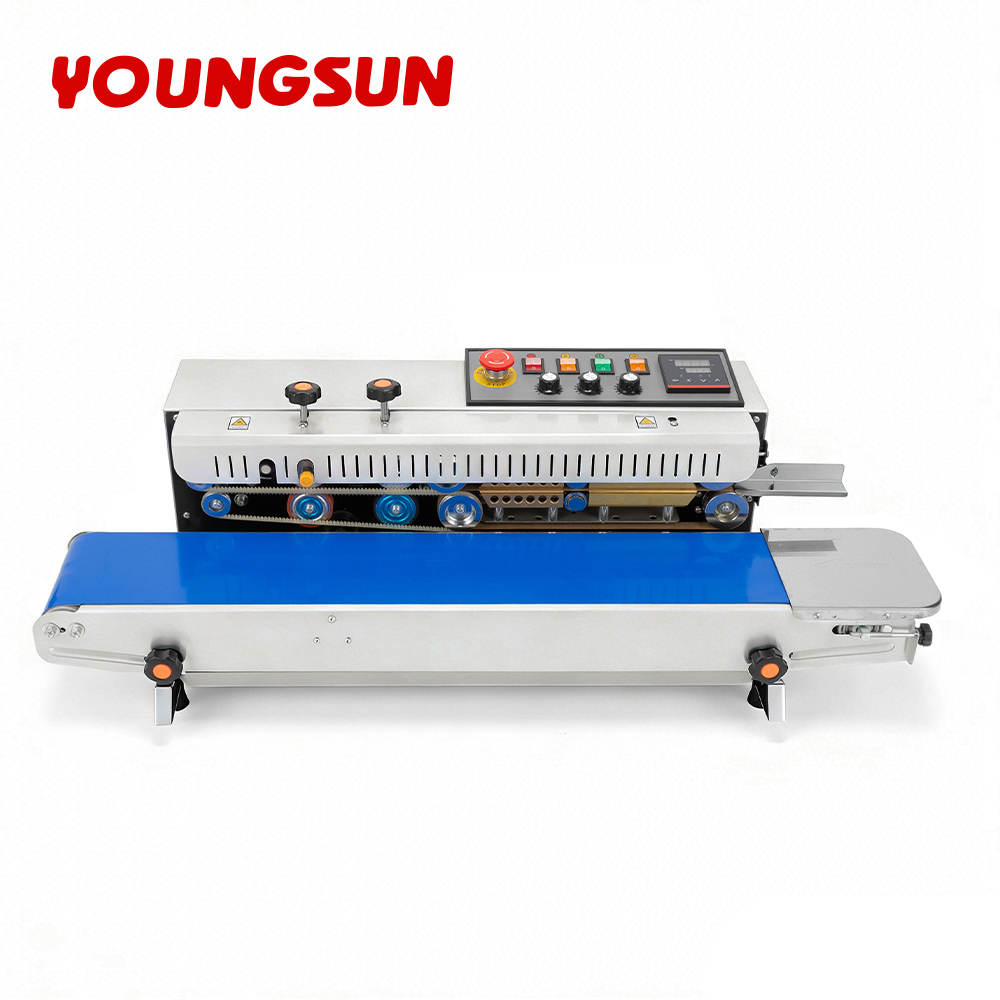
Diagnosing Repeated Sealing Strip Burnout in Continuous Band Sealers
A band sealer that burns through sealing strips every few weeks is not just an annoyance — it is a symptom of an underlying parameter mismatch or maintenance gap. Replacing the strip without fixing the root cause guarantees the same failure recurs.
The Physics Behind Sealing Strip Degradation
How Temperature Excess Attacks the Teflon-Coated Strip
The sealing strip in a band sealer operates as a thermal interface: it receives heat from a constant-temperature heating block and transfers that heat into the thermoplastic film passing beneath it. The strip's Teflon (PTFE) coating provides a non-stick surface that prevents molten polyethylene or polypropylene from adhering. When the temperature setpoint exceeds the film's actual sealing requirement, two degradation mechanisms accelerate simultaneously.
First, the Teflon coating begins to decompose above 260°C. PTFE releases fumes and loses surface smoothness, creating microscopic pits where molten polymer accumulates. Second, the fiberglass substrate beneath the Teflon loses tensile strength at sustained temperatures above 300°C. A strip that should last 800–1,000 operating hours fails at 200 hours because it has been running 40°C hotter than necessary.
Most operators set the band sealer temperature by trial: increase until the seal looks good, then add 10°C as a margin. The correct approach reverses this logic: start at the film manufacturer's recommended sealing temperature (typically 120–160°C for LDPE, 140–180°C for multi-layer laminates), and increase only in 5°C increments until seal strength meets specification. A band sealer with a PID digital controller, such as those in Youngsun's FR-900 series, holds temperature within ±2°C without the overshoot that plagues simple thermostat-controlled machines.
Film Residue Accumulation: The Silent Strip Killer
Every sealing cycle deposits a microscopic layer of melted polymer onto the Teflon surface. Over thousands of cycles, these layers carbonize — turning from clear residue into dark, abrasive deposits. Carbonized residue acts as a thermal insulator, forcing the operator to increase temperature to compensate for reduced heat transfer. The higher temperature accelerates further carbonization in a self-reinforcing cycle that ends with the Teflon coating cracking and the strip tearing.
Prevention requires a simple discipline: wipe the sealing strip with a clean cotton cloth while the band sealer is still warm (not hot — around 60–80°C) after every production shift. Stubborn residue responds to isopropyl alcohol on a soft cloth. Never use metal scrapers or abrasive pads, which scratch the Teflon and create nucleation sites for future residue accumulation.
Mechanical Factors That Shorten Strip Life
Belt Tension and Alignment
The pressure roller assembly in a band sealer compresses the two Teflon belts — the heating belt and the counter-pressure belt — against the film. Uneven tension creates a pressure gradient across the sealing width. The high-pressure zone transfers heat more efficiently, creating a hot spot on the strip that degrades faster than surrounding areas. Uneven roller wear, visible as a thin strip consuming faster along one edge, confirms this diagnosis.
Correcting tension requires loosening the roller adjustment screws and using a feeler gauge to equalize the gap across the full roller width before re-tightening evenly. Most band sealer designs place the adjustment mechanism behind an access panel on the machine body.
A Food Packager's Strip Life Extension
A dried fruit packaging facility running a continuous band sealer on two 8-hour shifts was replacing sealing strips every 3 weeks. The operator maintained the temperature at 210°C for multi-layer film — 30°C above the film manufacturer's specification of 180°C. Carbonized residue buildup required the higher temperature to achieve acceptable seal strength.
The facility's maintenance team switched to a structured cleaning protocol: warm wipe-down after each shift using a Youngsun band sealer's accessible strip path design, and a weekly deep clean where the strips were removed and soaked in a mild detergent solution. Temperature was reduced to 185°C using the machine's precise digital controller. Strip life extended from 3 weeks to 14 weeks, saving approximately 15 strip replacements annually.
Frequently Asked Questions
What temperature should a band sealer strip operate at?
The correct temperature matches the film's heat-seal layer melting point, typically 120–160°C for LDPE and 140–180°C for laminated films. Running hotter than necessary accelerates Teflon degradation without improving seal quality. Youngsun band sealers provide digital temperature control for precise setting.
How often should band sealer strips be replaced?
Under proper operation with clean film and correct temperature settings, sealing strips last 6–12 months at single-shift usage. Heavy contamination, excessive temperature, or uneven roller pressure can reduce this to 4–8 weeks.
Can a damaged Teflon strip be repaired?
No. Once the Teflon coating cracks or delaminates, the exposed fiberglass substrate will continue tearing. The strip must be replaced. Attempting to patch a damaged strip creates an uneven sealing surface that produces inconsistent seals.
What film types cause the fastest strip degradation?
PVC-based films leave corrosive chloride residue that accelerates Teflon degradation. High-slip additive films deposit waxy residues that carbonize at lower temperatures than standard films. Both require more frequent cleaning and lower operating temperatures.
Why does the strip burn more at the edges?
Edge burning indicates misaligned pressure rollers applying excessive force at the strip edges while the center receives insufficient pressure. Adjust roller parallelism using the machine's tension adjustment mechanism.
Does conveyor speed affect strip life?
Yes. Running at maximum speed (12 m/min on standard band sealers) increases friction cycles per hour, generating more heat at the strip-film interface. Slowing to 6–8 m/min reduces strip wear proportionally while maintaining adequate throughput for most operations.
