In the modern logistics, warehousing, manufacturing and e-commerce fulfillment sectors, carton sealers (also commonly referred to as carton taping machines or box sealers) stand as essential automated packaging equipment that streamlines the final stage of cargo packaging. Designed to replace inefficient, inconsistent manual carton taping operations, these machines deliver fast, uniform and secure sealing for corrugated cartons of various sizes, playing a pivotal role in improving packaging efficiency, enhancing cargo safety during transit, reducing labor costs and standardizing packaging workflows. As a core component of end-of-line packaging systems, carton sealers are widely adopted across industries of all scales, from small workshops and retail warehouses to large-scale manufacturing plants and fully automated logistics centers. This article provides an in-depth overview of carton sealers, covering their classification, working principles, core components, operational advantages, typical application scenarios and practical selection tips, offering a thorough and professional understanding of this indispensable packaging equipment.
Classification and Structural Design of Carton Sealers
Carton sealers are categorized based on automation level, functional design and actual application scenarios, mainly divided into semi-automatic carton sealers and fully automatic carton sealers, the two most mainstream types in the global market, alongside specialized custom models for non-standard carton sizes and heavy-duty industrial applications.
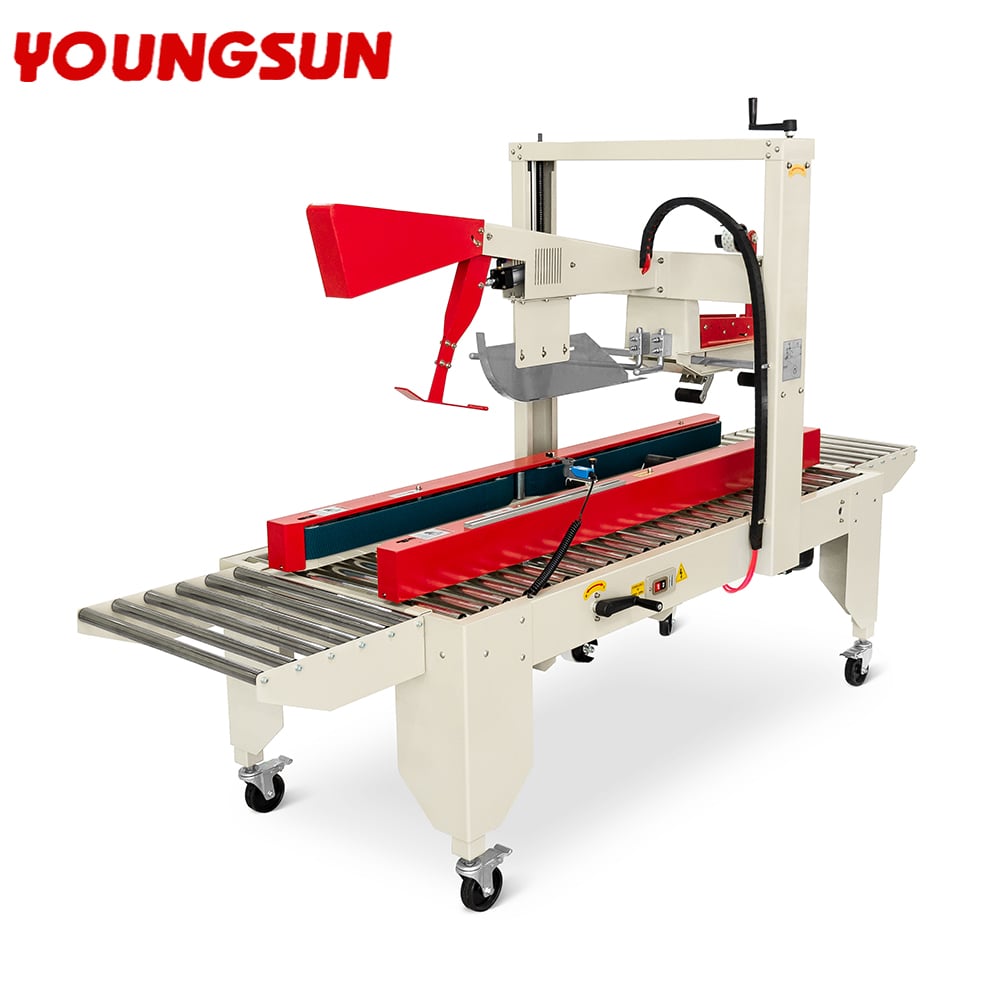
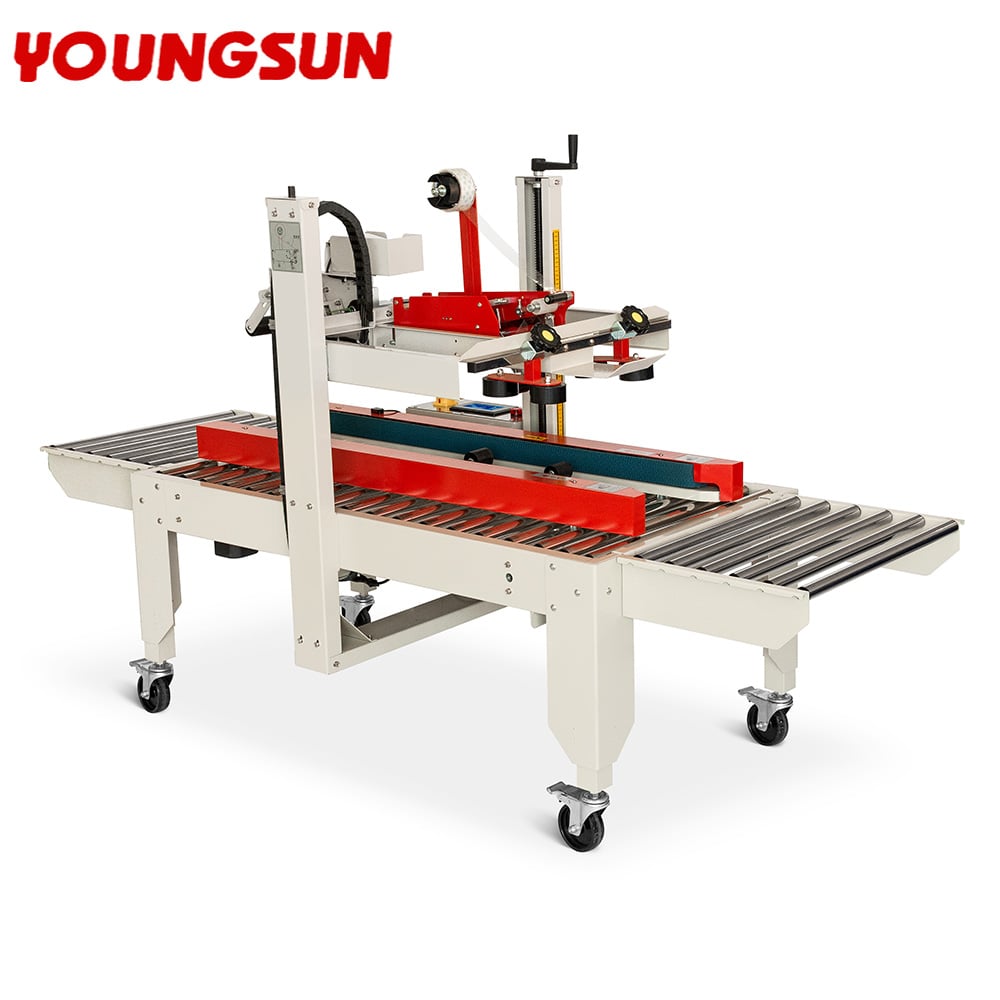
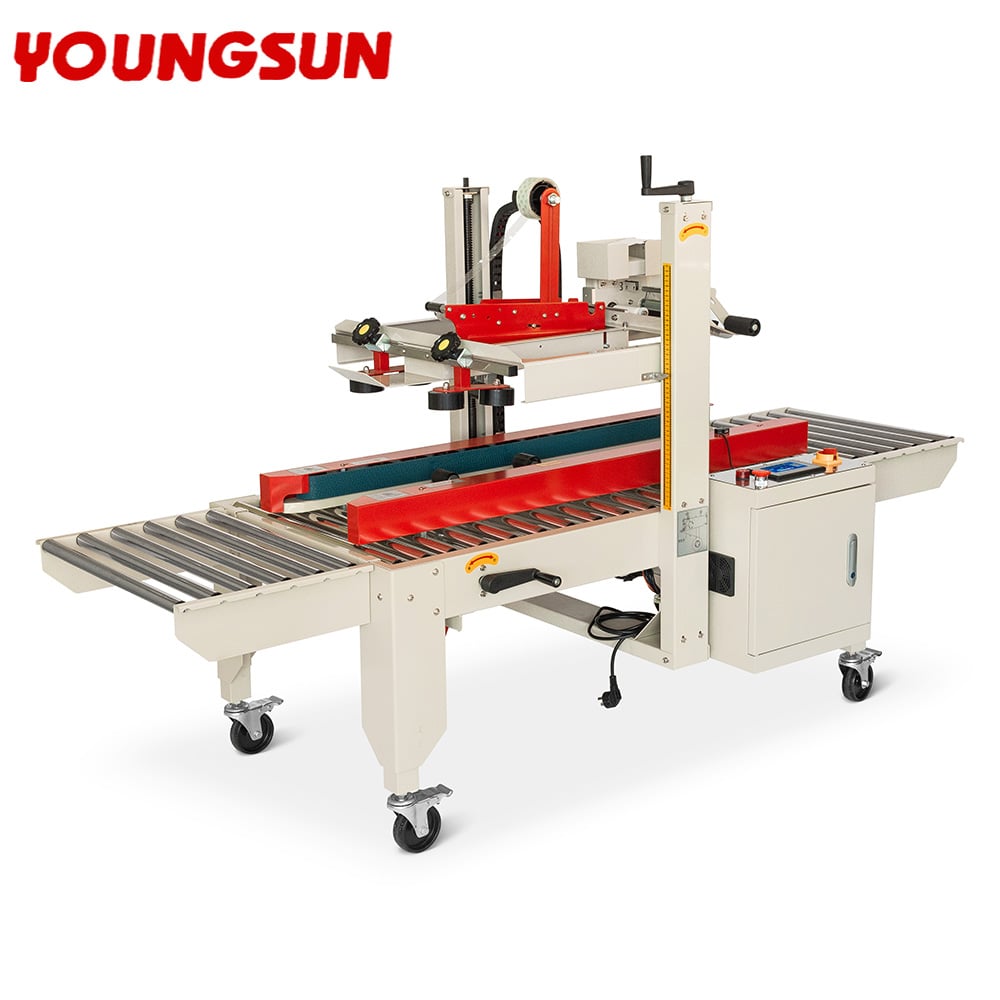
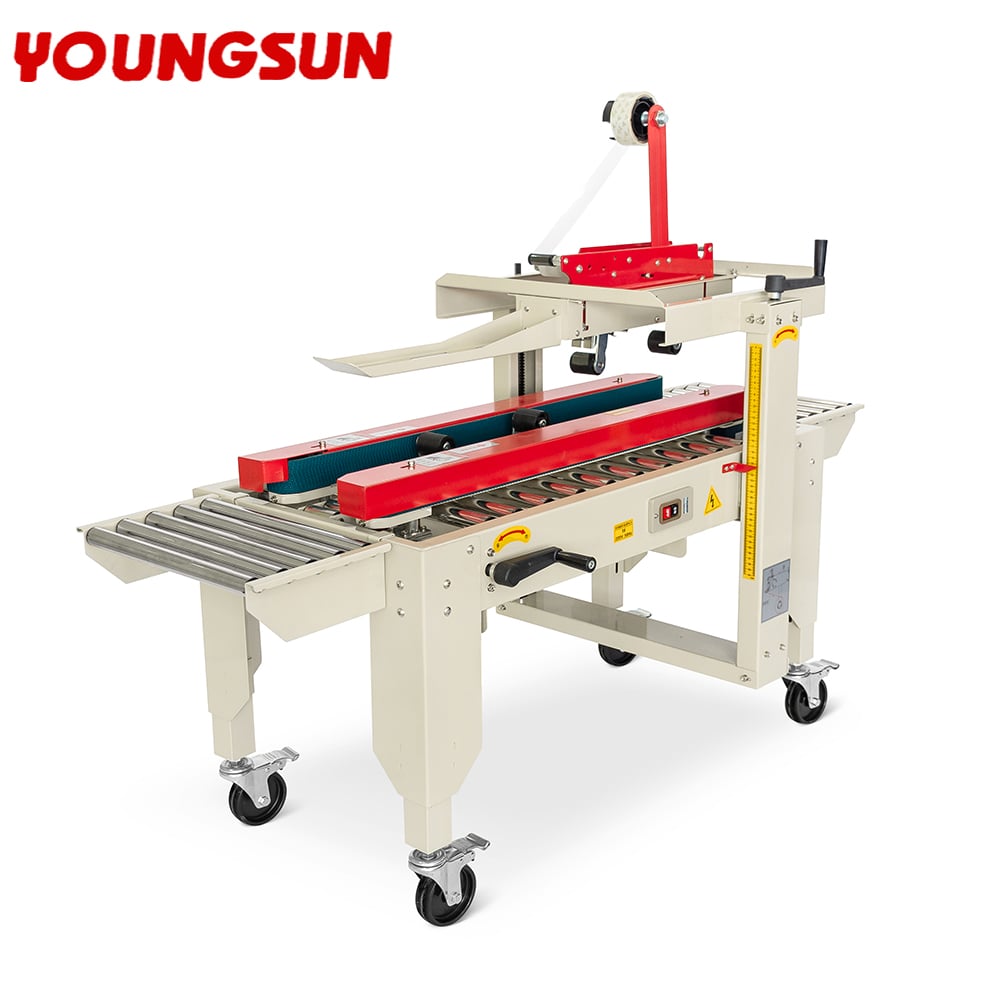
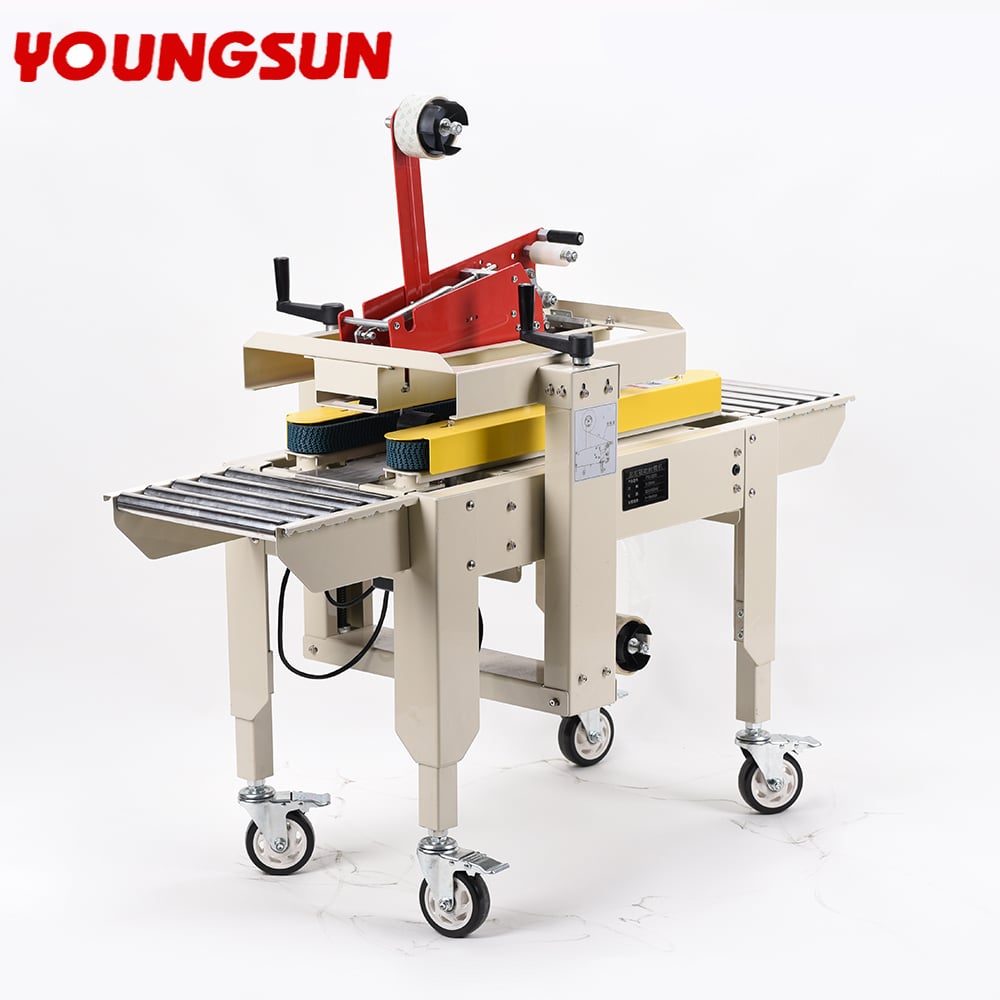
Semi-automatic carton sealers are the most cost-effective and popular choice for small-to-medium enterprises (SMEs) with fluctuating carton sizes and low-to-medium daily packaging volumes. These machines require simple manual operation for carton flap folding and carton placement onto the conveyor belt, after which the machine automatically completes top and bottom tape application, firm sealing and neat tape cutting. Most semi-automatic models feature quick-adjust height and width mechanisms, allowing operators to adapt to cartons of different dimensions within minutes without complex debugging, making them highly flexible for diversified small-batch packaging needs. They are compact in size, lightweight, easy to operate and maintain, and perfectly suitable for workshops with limited space or irregular production schedules.
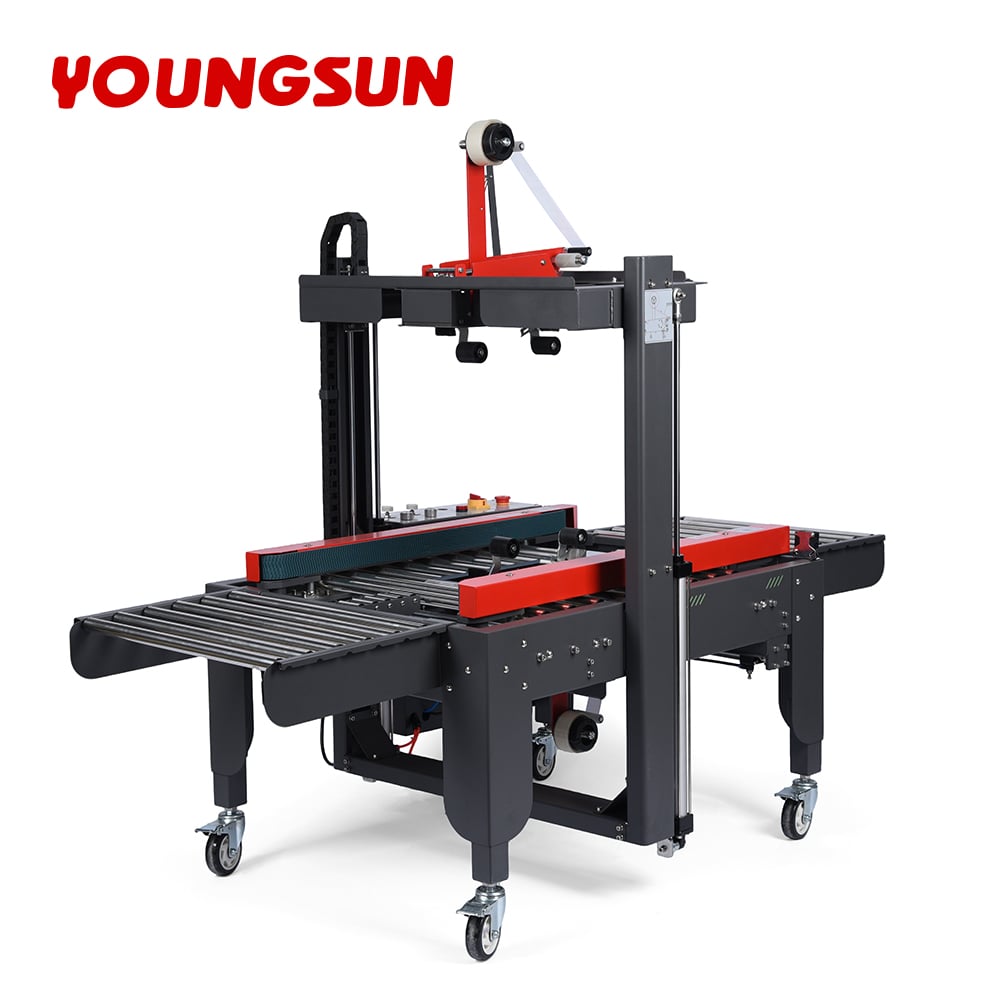
Fully automatic carton sealers are engineered for high-volume, continuous and unmanned packaging operations, representing the advanced end of carton sealing technology. These integrated intelligent machines eliminate nearly all manual intervention: they automatically fold carton top flaps, position the carton accurately via sensor detection, apply sealing tape to both top and bottom seams smoothly, and cut the tape cleanly without burrs. Equipped with precision sensors and digital intelligent control systems, fully automatic carton sealers can detect carton length, width and height in real time, adjust conveyor speed and sealing pressure automatically, and achieve a stable sealing speed of up to 20 to 30 cartons per minute. Heavy-duty fully automatic models are specially designed for large, heavy or extra-wide cartons, with reinforced steel frames and wear-resistant tape heads to withstand long hours of uninterrupted operation in large logistics hubs and mass production lines.
Additionally, carton sealers can be divided into side-sealing models and top-bottom sealing models based on sealing method, with the latter being the most commonly used for standard carton packaging. Some specialized carton sealers also support printed brand tape or reinforced kraft tape application, catering to enterprise brand promotion, anti-counterfeiting and high-strength packaging requirements.
Working Principles and Core Components
The core working principle of a carton sealer revolves around precise tape feeding, stable pressure application and clean tape cutting, leveraging efficient mechanical transmission and reliable electric control systems to ensure consistent and firm sealing quality. The key components that determine the machine’s durability and performance include the conveyor system, tape head assembly, flap folding mechanism, size adjustment structure and humanized control panel.
The conveyor system, usually equipped with anti-slip rubber or durable plastic rollers, transports cartons steadily through the sealing zone at a constant speed, preventing carton tilting, jamming or surface scratches. The tape head assembly is the core working part, consisting of a tape roll holder, guide rollers, pressure wheels and a sharp cutting blade; it ensures the tape is stretched evenly, adhered tightly to carton seams without wrinkles, bubbles or loose edges, and cut neatly for a tidy finish. The flap folding mechanism, exclusive to automatic models, uses curved guide plates and elastic pressure rods to fold carton top flaps smoothly and accurately, avoiding misalignment that compromises sealing effect. The quick-adjust structure enables manual or electric resizing to fit different carton specifications, while the intuitive control panel supports speed regulation, pressure tuning and fault alerts for easy operation and maintenance.
Core Advantages and Application Scenarios
Compared with manual carton sealing, carton sealers deliver unmatched advantages that optimize overall packaging operations. First, they drastically boost efficiency: manual taping only handles 3-5 cartons per minute, while semi-automatic models reach 10-15 cartons and fully automatic units hit 20-30 cartons, easily meeting peak order fulfillment demands. Second, they guarantee consistent, professional sealing quality, eliminating uneven taping and loose seams, and enhancing cargo protection against dust, moisture and transit damage. Third, they reduce long-term costs by cutting tape waste, lowering labor intensity and minimizing workplace injuries. Finally, their strong compatibility with various corrugated cartons and sealing tapes makes them versatile across multiple industries.
Carton sealers are widely applied in e-commerce, retail, electronics, hardware, food, cosmetics, pharmaceuticals and logistics industries. They serve as critical equipment for order packaging, finished product warehousing, cargo distribution and cross-regional transportation, bridging production and logistics to build a standardized, efficient packaging chain for businesses of all sizes.

 EN
EN
