 EN
EN

How to Choose the Right Sealing Machine for Your Business?
A small food startup bought a high-speed automatic sealing machine because it looked impressive. The machine sat unused for six months—it was too complex for their low-volume, mixed-product operation. They eventually sold it at a loss and bought a simple manual impulse sealer that perfectly matched their needs.
Choosing the right sealing machine is not about buying the most advanced or the cheapest option. It is about matching the machine's capabilities to actual production requirements. Get it right, and packaging becomes efficient, consistent, and cost-effective. Get it wrong, and the machine becomes an expensive paperweight.
Understanding the Basic Types of Sealing Machines
Sealing machines fall into several categories, each designed for specific applications:
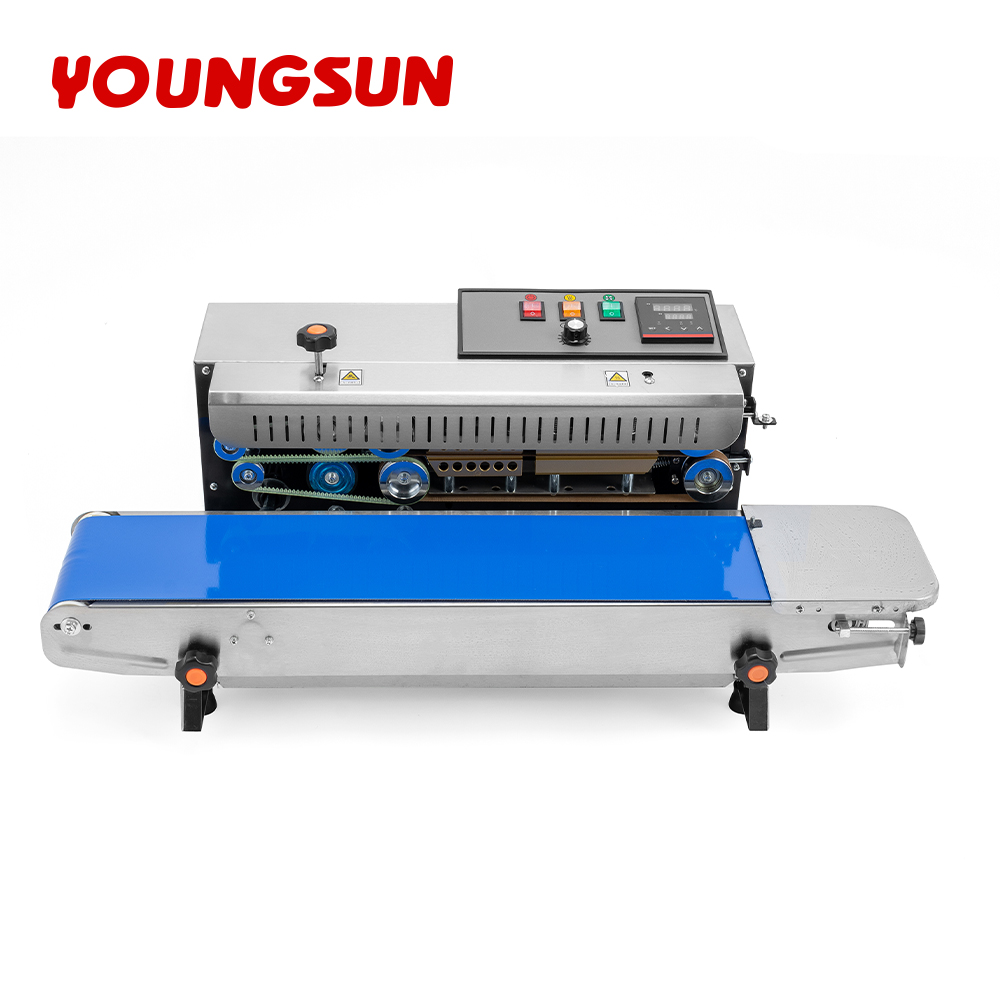
Band sealers (continuous band sealers) use a moving conveyor belt and heated sealing bands to create continuous seals on flexible film packages. They are designed for high-volume, uninterrupted sealing of polyethylene, polypropylene, laminated films, and aluminum foil bags.
Impulse sealers apply a brief burst of heat to create a seal, then cool immediately. They are suitable for low-to-medium volume operations and are often used for sealing bags made of PE, PP, and other thermoplastic materials.
Hand-held sealers are portable tools for sealing bags in locations where a stationary machine is impractical.
Carton sealers (tape machines) apply adhesive tape to close corrugated cartons. They are available in semi-automatic and fully automatic configurations.
Key Factors to Consider
Production Volume
Volume is the primary decision driver. A business sealing 100 bags per day has different needs than one sealing 10,000 bags per day.
Manual sealing handles 3–5 cartons per minute. Semi-automatic carton sealing machines reach 10–15 cartons per minute. Fully automatic units hit 20–30 cartons per minute.
Packaging Material
Different materials require different sealing technologies. Polyethylene and polypropylene films seal well with impulse or band sealers. Multi-layer laminated films may require higher temperatures and consistent pressure—band sealers with constant temperature control are often the best choice.
Package Size and Shape
Band sealers come in horizontal and vertical configurations. Horizontal models suit flat bags with solid contents. Vertical models are designed for stand-up bags containing powders, liquids, or granular materials.
Labor Availability and Skill Level
If skilled operators are scarce, an automatic machine reduces training requirements. Semi-automatic machines require manual carton placement but automate the sealing process. Fully automatic machines eliminate nearly all manual intervention.
Floor Space
A sealing machine occupies valuable floor space. Semi-automatic carton sealers are compact. Fully automatic systems with conveyors require more room. Measure available space before purchasing.
Total Cost of Ownership
Purchase price is only the beginning. Consider energy consumption, maintenance costs, consumables, training, and downtime cost.
Matching Machine to Application
Food Packaging: Band sealers are widely used in food processing. Look for machines with stainless steel components and easy-clean designs.
E-commerce and Retail: Carton sealers are essential for order packaging. Semi-automatic models suit growing operations; fully automatic models support high-volume fulfillment centers.
Pharmaceutical and Cosmetics: Precision and consistency are critical. Band sealers with integrated coding wheels that print batch numbers and expiration dates during sealing save additional processing steps.
Industrial and Hardware: Heavy-duty sealing machines with reinforced frames handle larger and heavier packages.
Common Selection Mistakes
Buying too much machine: An automatic machine for a low-volume operation wastes money.
Buying too little machine: A manual sealer for a growing operation becomes a bottleneck within months.
Ignoring material compatibility: Not all sealers work with all materials. Always test the machine with actual packaging materials.
Overlooking spare parts availability: Machines without readily available spare parts become expensive when they break.
A Practical Selection Process
- Document requirements: Volume, materials, package sizes, available labor, floor space
- Research options: Identify machine types that match the requirements
- Request demonstrations: See machines running with actual packaging materials
- Check references: Speak with other users about reliability and support
- Compare total cost: Include purchase price, consumables, maintenance, and energy
- Make the decision: Choose the machine that best matches the requirements
Frequently Asked Questions
What type of sealing machine is best for small businesses?
For small businesses sealing under 500 bags or cartons daily, a manual impulse sealer or semi-automatic carton sealer is usually the best choice. These machines are affordable, simple to operate, and require minimal maintenance.
What is the difference between a band sealer and an impulse sealer?
A band sealer uses continuous heat and conveyor feeding for high-volume, non-stop sealing. An impulse sealer applies a brief heat pulse and is better for low-to-medium volume operations with intermittent use.
How do I know what size sealing machine I need?
Consider maximum package dimensions and production volume. For carton sealers, measure the range of carton sizes. For band sealers, consider bag width and thickness. Choose a machine that accommodates the largest and smallest packages in the product line.
Can one sealing machine handle different packaging materials?
Many band sealers and impulse sealers support multiple materials by adjusting temperature and speed settings. However, always verify compatibility with the specific materials—some machines are optimized for certain film types.
How much does a commercial sealing machine cost?
Prices range from under 500 for manual impulse sealers to over 10,000 for fully automatic carton sealers with conveyor systems. Band sealers typically fall in the 1,000–5,000 range depending on features and capacity.
What should I look for in a sealing machine supplier?
Look for suppliers with established manufacturing capabilities, spare parts availability, and technical support. Youngsun Equipment, with over 40 years of experience, represents one example of an established supplier in the packaging equipment industry.
