EN
EN

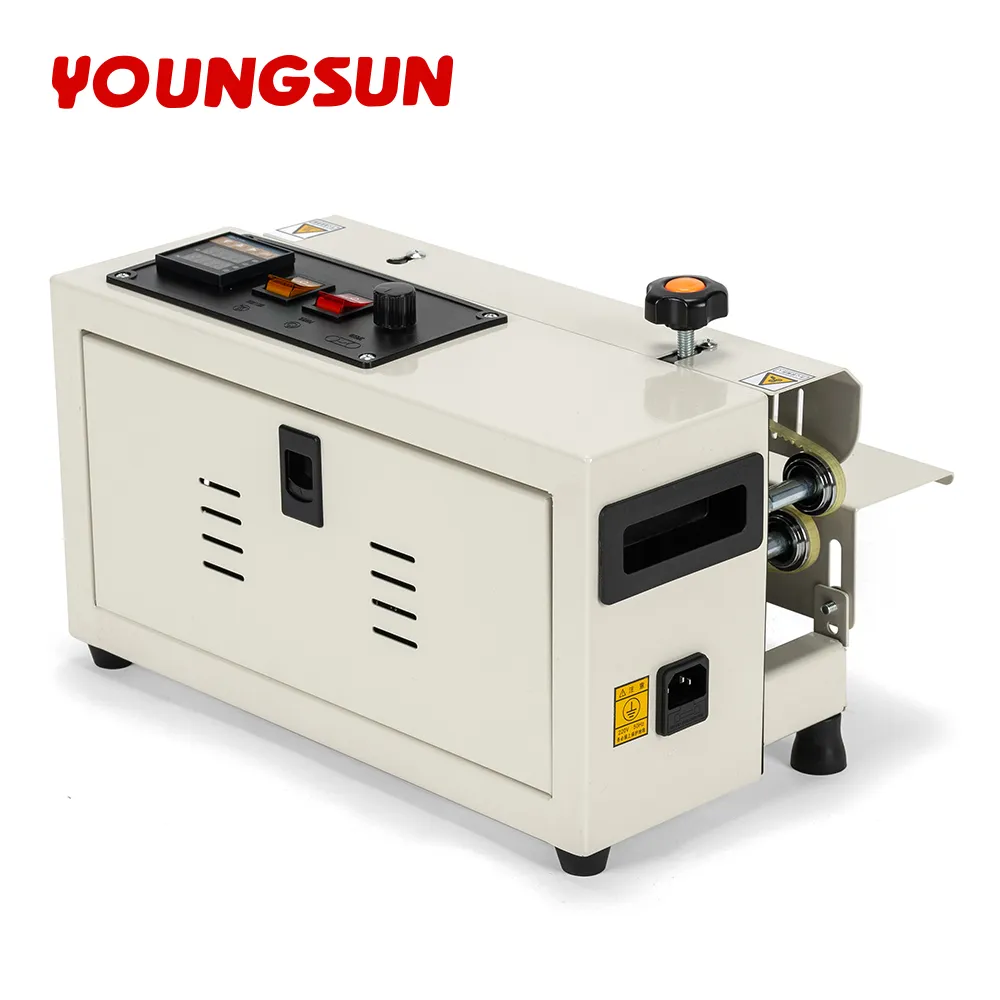
Thermal Imbalance in the Band Sealer: Causes and Effects on Film Behavior
Excessive Heat Causing OPP/CPP Film Shrinkage and Edge Pulling
When band sealer temperatures exceed optimal ranges, OPP (oriented polypropylene) and CPP (cast polypropylene) films undergo rapid thermal shrinkage—contracting up to 3% within milliseconds. This abrupt contraction creates uneven tension across the bag mouth, pulling sealed edges inward and producing permanent “edge curl” wrinkles along the seal line. The effect is most pronounced in laminated structures where outer OPP layers shrink faster than adhesive or sealant layers, amplifying distortion. To prevent molecular overstimulation, operators should calibrate heat settings below film-specific thresholds—typically 130–150°C for standard OPP—and limit dwell time to under 0.8 seconds.
Insufficient Heat Preventing Stress Relaxation and Locking in Wrinkle-Prone Tension
Inadequate heating fails to activate stress-relaxation mechanisms in polyolefin films, trapping mechanical tension from upstream processes like collar forming. When film temperatures remain below 110°C during sealing—well below the glass transition temperature (Tg) of most polyolefins—polymer chains cannot reconfigure to relieve internal stresses. This “frozen tension” becomes permanent upon cooling, causing wrinkles as the material seeks equilibrium. Effective relaxation requires 0.3–0.5 seconds above Tg, a condition unattainable with underpowered heaters or excessive line speeds. The issue worsens with thicker films (>80 μm), where delayed heat penetration creates thermal gradients across the seal width, driving gradient-induced wrinkling.
Mechanical Factors in the Band Sealer: Jaw Alignment, Pressure Uniformity, and Tension Control
Jaw Misalignment or Degraded Silicone Pad Leading to Non-Uniform Seal Pressure
Uneven pressure across sealing jaws is a leading mechanical cause of bag mouth wrinkles. Misaligned jaws or worn silicone pads create pressure differentials that compress film layers inconsistently during heat application. Industrial testing shows jaw alignment gaps exceeding 0.5 mm increase wrinkle occurrence by 60% in CPP films, forcing internal layer shifting before fusion. A simple diagnostic test involves placing thermal paper between jaws and activating the sealer: uniform pressure yields continuous marks; spotty or broken lines indicate misalignment or pad degradation. Hardened silicone pads—common after prolonged thermal exposure—lose compliance and fail to distribute force evenly, inducing localized stretching that emerges as ripples post-sealing. Proactive replacement every 12–18 months mitigates this failure mode.
Collar Roller and Forming Tube Misalignment Disrupting Bag Mouth Tension Before Sealing
Consistent bag mouth tension prior to sealing is essential. When collar rollers deviate more than 1° from the forming tube axis, asymmetric drag forces distort the film before it reaches the sealer. This misalignment introduces uneven stress distribution across the bag mouth, predisposing it to buckling during heat application. As the distorted film enters the band sealer, these pre-existing deformations become thermally locked into the final seal. Critical corrective actions include verifying collar roller height matches the product’s fill line, ensuring the forming tube is centered relative to the sealing jaws, and confirming all rollers rotate freely without binding. Packaging line analyses confirm such adjustments reduce wrinkle formation by 45%.
Film-Specific Variables Impacting Wrinkle Formation in Band Sealing Applications
OPP vs. CPP Thermal Shrinkage Profiles and Their Response to Band Sealer Dwell Time
OPP and CPP films respond differently to band sealer conditions due to their distinct molecular structures. OPP exhibits significant machine-direction shrinkage above 120°C, making it highly sensitive to dwell time—if too long, differential shrinkage pulls edges inward. CPP, by contrast, maintains greater dimensional stability but requires higher temperatures (140–160°C) for full polymer fusion. Industrial data confirms OPP shrinks 3–5% faster than CPP at identical settings, underscoring the need for precise dwell-time recalibration when switching between materials.
Aged, Low-Quality, or Improperly Stored Film: Compromised Melt Consistency and Post-Seal Deformation
Films stored beyond six months—or exposed to temperature fluctuations, high humidity (>50% RH), or direct sunlight—develop crystalline inconsistencies that impair melt flow. Laboratory analysis shows degraded polymers require 15–20% more thermal energy to achieve seal integrity, yet remain vulnerable to post-seal relaxation wrinkles due to weakened molecular chains. Low-quality films with thickness variation exceeding ±12% compound the problem by creating localized tension differentials during cooling. Humidity accelerates plasticizer migration, further reducing elasticity and increasing susceptibility to deformation under thermal and mechanical stress.
Diagnostic and Preventive Best Practices for Reliable Band Sealer Performance
To prevent bag mouth wrinkling and ensure consistent seals, implement a structured diagnostic and maintenance routine. Regularly inspect sealing surfaces for contamination or wear—debris causes uneven pressure that distorts film. Calibrate heat settings and tension controls weekly per manufacturer guidelines to avoid thermal imbalances. Schedule preventive checks—including jaw and roller alignment verification—to maintain uniform pressure during operation. Adhering to these best practices minimizes downtime, extends equipment lifespan, and reduces costly rework.
Table of Contents
- Thermal Imbalance in the Band Sealer: Causes and Effects on Film Behavior
- Mechanical Factors in the Band Sealer: Jaw Alignment, Pressure Uniformity, and Tension Control
- Film-Specific Variables Impacting Wrinkle Formation in Band Sealing Applications
- Diagnostic and Preventive Best Practices for Reliable Band Sealer Performance