 EN

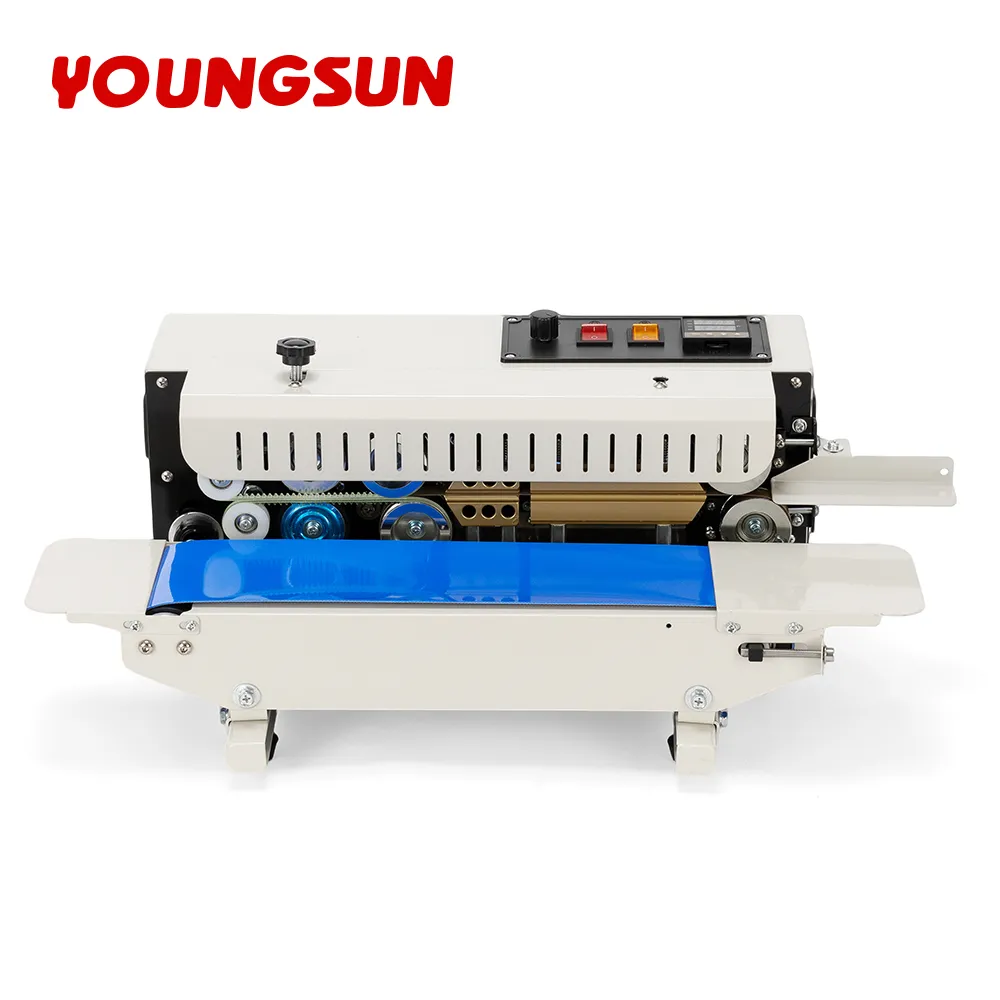
A field case: a band sealer set too cold
What the snack line showed about the band sealer
A contract packer running potato chips noticed seals opening during transit. The band sealer sat at a low setpoint because an operator feared burning the film. At that setpoint the band sealer never reached the melt temperature the laminate needed. A band sealer that seals cold leaves a seam that looks closed yet pulls apart with light finger pressure. The packer lost two pallets before anyone measured the actual seam strength, and the same unit kept failing until the cause was found.
The failure was subtle at first. The band sealer produced seams that passed a visual check on the line, so nobody suspected temperature. Only when a distributor returned a batch did the plant run a pull test. The band sealer then revealed a seam strength less than half the spec. A simple thermocouple placed on the band showed the real temperature was far below the dial reading, a gap the team had never measured before.
The quick fix that reset the band sealer
Raising the band sealer by roughly fifteen degrees restored a clean, uniform seam. The unit then held a steady seal across the full shift. This case shows why guessing a temperature costs more than testing one. A band sealer rewards a measured approach far more than a fearful one, and the same equipment kept performing once the setpoint was documented for every film change.
After the fix, the plant added a short startup routine. The band sealer now warms up for ten minutes, then the first five bags are pulled and checked. That single habit removed the guesswork. The band sealer has not produced a weak seam since, and the team logs the setpoint next to each film code so future shifts start from a proven number rather than an assumption.
Risk analysis: a band sealer at the wrong heat
Cold seams and burnt film from a band sealer
A band sealer running too cold produces weak, leaky seams that let in moisture and oxygen. A band sealer running too hot scorches the film, narrows the seal, and can weld the belt. Both failure modes hide at a glance yet surface later as returns and complaints. The unit gives no obvious alarm; only the seam quality tells the story. Operators should treat any change in film as a reason to re-check the band sealer setpoint before a long run begins.
Cold seals are the quieter risk. A band sealer that under-seals may pass inspection for days, then fail in the field where temperature and handling are harsher. Hot seals are louder but also dangerous, because melted film can fuse to the belt and stall the line. Either way, the band sealer stops protecting the product. The safest habit is to validate the seam on scrap material every time the film, speed, or ambient condition changes on the floor.
Professional analysis and the standards behind a band sealer
How the band sealer transfers heat
A band sealer uses heated bands pressed against the film while a conveyor pulls the pouch through. The unit transfers heat into the seal layer until it flows and bonds. Thicker laminates and higher speeds need more energy, so the equipment must run hotter or slower. Temperature, pressure, and dwell time form a triangle; a band sealer with stable control keeps that triangle balanced. When the machine loses heat at one band, seams drift unevenly across the roll.
Dwell time is the part many operators overlook. A band sealer with a faster conveyor gives the film less time at temperature, so the setpoint must rise to compensate. A band sealer running thick foil needs both higher heat and firmer pressure than one running thin polyethylene. The relationship is physical, not optional. Documenting the three values together turns sealing from luck into a repeatable process that any shift can reproduce without trial and error.
Why a band sealer must meet CE and ISO 9001
A compliant band sealer built for export carries CE marking under the EU Machinery Directive 2006/42/EC. The unit should follow EN ISO 12100 for risk reduction and IEC/EN 60204-1 for electrical safety. A manufacturer operating an ISO 9001 system documents how each machine is built and tested. These references give buyers confidence that the equipment meets baseline safety expectations. A band sealer without this paperwork faces barriers in regulated markets across Europe and beyond.
Standards also protect the operator. A band sealer wired to IEC/EN 60204-1 includes guards, emergency stops, and fault protection that a homemade unit may lack. EN ISO 12100 pushes the design to remove hazards at the source rather than warn around them. For a distributor, selling a band sealer with proper certification reduces liability and supports smoother customs clearance, which matters as much as the seal quality itself.
Practical value: choosing, running, caring for a band sealer
Selecting the right band sealer by film
Choose a band sealer matched to the film family in use. A band sealer rated for laminates handles foil and multi-layer pouches better than one sized only for polyethylene. Confirm the unit supports the bag width and the daily volume. Youngsun supplies continuous band sealers engineered for food, pharma, and chemical lines, with CE and ISO 9001 documentation available for distributors reviewing a band sealer purchase through the product page. See also carton sealing machines for complementary line equipment.
Matching the band sealer to volume is just as important as matching the film. A band sealer sized for a small batch will overheat under continuous duty, while an oversized unit wastes energy and floor space. The right band sealer leaves headroom for seasonal peaks without running at its limit. Asking the supplier for the duty cycle and the spare-part list up front prevents most surprises during the first busy quarter after installation.
Inspecting and using a band sealer daily
Before a run, an operator should confirm the band sealer temperature matches the film spec and watch the first ten seams. The unit needs a short warm-up; sealing too early wastes material. During use, the equipment should be fed centred so pressure stays even. A band sealer with a printing option can mark batches while sealing, which helps trace any later seam issue back to a setting that drifted overnight on the production floor.
Centring the pouch sounds trivial, yet it is where many lines lose quality. A band sealer with the film off to one side heats one band more than the other, and the seam weakens on the cooler edge. A simple guide rail fixes most of this. The band sealer also benefits from a clean infeed, because dust on the film acts as insulation. A thirty-second wipe before start-up protects the first hundred bags of the day.
Maintaining a band sealer for steady heat
A band sealer stays accurate when its bands and Teflon covers are cleaned and replaced on schedule. Dust and residue insulate the equipment and create cold spots. The unit benefits from a monthly check of the thermostat against a separate thermometer. Youngsun supports its band sealer range with spare belts and guidance, and the contact page connects buyers with the engineering team about a specific machine needing service or a spare part.
Preventive care is cheaper than scrap. A band sealer with a worn Teflon cover develops spots that never reach temperature, and those spots become weak seals that escape notice. Rotating covers on a calendar, rather than waiting for failure, keeps the band sealer honest. The band sealer also likes stable air; a dusty, vibrating corner ages the controls faster, so a clean mount pays back in fewer midnight service calls.
Frequently Asked Questions
What temperature does a band sealer need for polyethylene?
Answer: A band sealer running polyethylene film typically seals near 160 to 180 degrees Celsius, though the exact figure depends on film thickness and line speed. The unit should be tested on scrap pouches before a production run. A band sealer that seals cleanly without wrinkling at the lowest workable heat gives the safest, most consistent result for daily output and keeps energy use reasonable across long shifts.
How does a band sealer differ from an impulse sealer?
Answer: A band sealer uses continuously heated bands and a moving conveyor, which suits high-volume lines, while an impulse sealer heats only on demand for short batches. The unit keeps running without cool-down between bags. For distributors serving factories, a band sealer offers throughput that manual and impulse units cannot match across long shifts, making it the standard choice for continuous packaging operations.
Why does a band sealer leave weak seams?
Answer: A band sealer leaves weak seams when temperature is too low, pressure uneven, or speed too high for the film. Contaminated bands also insulate heat away from the seal. The unit should be re-tested after any film change. Checking the equipment with a simple pull test on the first bags catches most weak-seam problems before they reach customers and trigger costly returns from the field.
Can a band sealer handle foil laminate?
Answer: A band sealer rated for laminates can seal foil and multi-layer pouches when the setpoint matches the seal layer. The unit must reach the melt temperature without scorching the outer print. Suppliers such as Youngsun offer a band sealer built for aluminium foil laminates, and the product page lists compatible film types for each model in the current range.
How often should a band sealer be calibrated?
Answer: A band sealer should be checked against a reference thermometer monthly in busy plants, and whenever seam quality drifts. The unit thermostat can drift with age and dust. A short calibration routine keeps the equipment honest and reduces scrap. Facilities that log each reading catch temperature drift long before it affects packaged product quality or the final shelf life of sealed goods.
Does a band sealer need special electrical setup?
Answer: A band sealer sold for export usually supports common voltages, but the unit must be wired to a protected supply sized for its heating load. Electrical safety follows IEC/EN 60204-1, so the equipment should be installed by a qualified technician. A band sealer with proper grounding and emergency stop protects operators and keeps the line compliant with machinery safety rules.
