 EN

Real-World Battery Runtime per Charge for Electric Strapping Machines
Typical runtime range: 200–400 cycles per charge under standard load
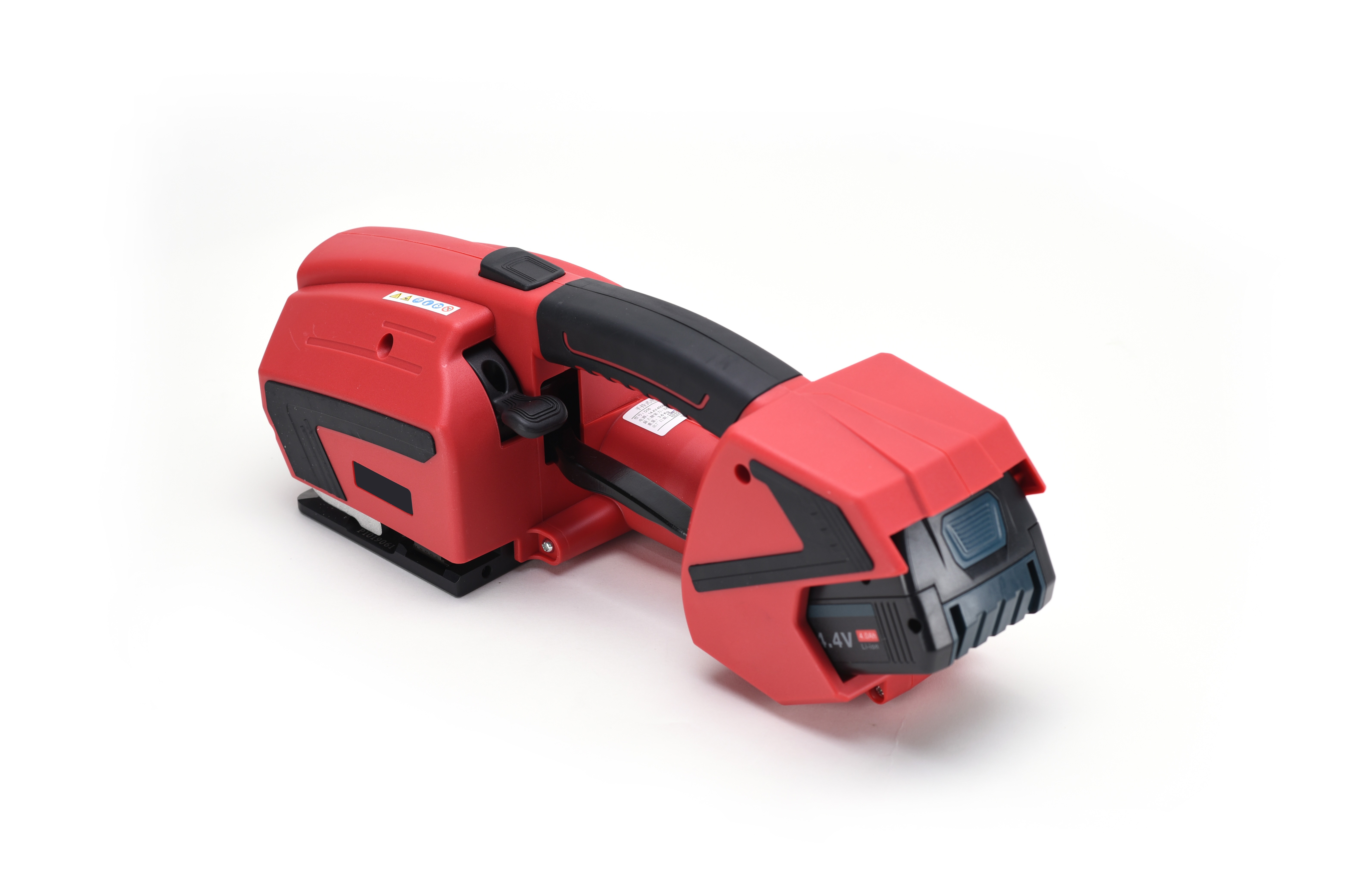
Battery runtime for electric strapping machines is most meaningfully expressed in complete strapping cycles—not hours—since each cycle (tensioning, sealing, and cutting) draws a consistent, measurable energy load. Under standard conditions—12–16 mm polypropylene (PP) or polyester (PET) strap, tension set to 60–70% of maximum, and moderate cycling frequency—most cordless models deliver 200–400 cycles per full charge. Field data from industrial packaging operations in 2026 show a median of 300–350 cycles for well-maintained lithium-ion packs.
This range depends primarily on battery specifications and ambient conditions. Most tools use 14.4V or 18V lithium-ion packs, with capacities spanning 3.0 Ah to 5.0 Ah. A higher-capacity pack (e.g., 5.0 Ah) tends to reach the upper end of the range, while older or partially degraded batteries may fall below 200 cycles. Temperature also plays a key role: operation below 5°C can temporarily reduce usable cycles by 10–20%, so standard runtime ratings assume 20–25°C ambient temperature and a 70–80% depth of discharge per cycle.
Manufacturers typically rate runtime at 50% tension and 10 cycles per minute, a controlled baseline that yields ~280 cycles for a typical 4.0 Ah pack. Real-world variation—driven by strap width, seal type, battery age, and environmental factors—accounts for the full 200–400 range.
How strap material, tension setting, and cycle frequency impact runtime
Three operational variables significantly shift actual cycles per charge:
- Strap material: Polyester requires more motor torque than polypropylene due to its stiffness and higher tensile strength; woven or corded variants further increase friction and power draw. Lightweight PP strap consistently delivers lower energy consumption and longer runtime.
- Tension setting: Higher tension extends motor run time per cycle. Industrial field tests (2026) show that increasing tension from 40 kg to 80 kg can reduce total cycles per charge by 30–50%. Lowering tension to the minimum required for load integrity is among the most effective ways to preserve battery capacity.
- Cycle frequency: Continuous, back-to-back cycling raises motor and battery temperatures, increasing internal resistance and reducing voltage efficiency. Brief pauses (5–10 seconds between cycles) allow for thermal recovery and voltage stabilization. Manufacturer-rated runtimes assume a 10–15% duty cycle, not continuous operation.
Operators who switch from PET to PP strap, reduce tension to functional minimums, and adopt short inter-cycle pauses commonly see runtime improve from the low 200s to 350–400 cycles per charge—without upgrading hardware. For example, an 18V 4.0 Ah tool rated at 300 cycles using 12 mm polyester at 60 kg tension may drop to just 180 cycles at 90 kg. Reducing cycle frequency from 15 to 8 per minute can recover roughly 20% of that lost runtime.
Lithium-Ion Battery Technology in Modern Electric Strapping Machines
Why NMC lithium-ion cells dominate: energy density, voltage stability, and low self-discharge
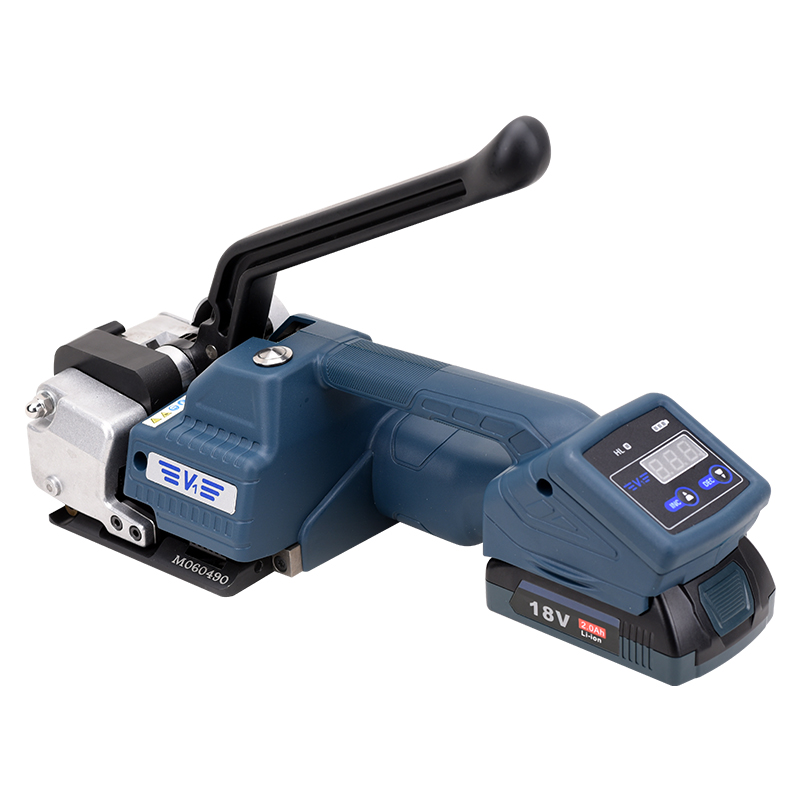
NMC (nickel manganese cobalt) lithium-ion cells have become the industry standard for electric strapping machines because they uniquely balance three critical performance attributes needed in dynamic packaging environments.
First, energy density: NMC cells deliver 200–250 Wh/kg, enabling compact, lightweight battery packs capable of powering 200–300+ high-torque strapping cycles without compromising ergonomics or portability—unlike heavier nickel-based alternatives.
Second, voltage stability: NMC chemistry maintains a flat discharge curve between 3.6 V and 3.0 V per cell, ensuring consistent motor performance and reliable strap tension from the first to final cycle—critical for maintaining seal integrity and load security.
Third, low self-discharge: A fully charged NMC pack loses only 1–2% of capacity per month when idle, compared with 15–20% for legacy NiCd batteries. This translates directly into reduced morning recharge delays and fewer mid-shift voltage drops.
These advantages—combined with strong high-rate discharge capability for demanding PET applications—make NMC the optimal choice for modern, UL 2580–compliant industrial battery packs.
Charging Efficiency and Long-Term Battery Cycle Life
Fast charging: 60–90 minutes to 80% (UL 2580 compliant)
Most lithium-ion battery packs in electric strapping machines achieve 80% state-of-charge in 60–90 minutes, meeting the safety and performance requirements of UL 2580, the benchmark standard for industrial rechargeable battery systems. This rapid turnaround supports seamless shift handovers and minimizes line stoppages during short breaks.
However, speed entails trade-offs. Charging at high rates (e.g., 3C) cuts charge time by up to 65%, but accelerates electrode stress through ion concentration gradients—raising internal resistance ~18% faster than standard 1C charging (2026 industry battery research). To mitigate this, leading tools employ adaptive charging algorithms, dynamically adjusting current based on real-time battery temperature and state-of-charge.
For longevity, operators should avoid routinely charging to 100% unless necessary. Partial top-ups between 20% and 80% reduce cumulative stress and extend service life.
Expected lifespan: 500–800 full charge cycles before 80% capacity retention
A typical NMC lithium-ion battery retains ~80% of its original capacity after 500–800 full charge cycles, assuming proper usage and thermal management. In single-shift operations using one full cycle per day, this equates to two to three years of stable runtime before noticeable fade.
Degradation is highly condition-dependent:
- Partial charging (20–80%) slows capacity loss significantly.
- Deep discharges (below 10%) and sustained exposure to heat (>40°C) accelerate aging.
- Batteries with 95% round-trip efficiency lose ~12% less capacity per 1,000 cycles than those at 85% efficiency (2026 battery performance benchmarks).
Monitoring runtime decline and tracking charge cycles helps operators schedule replacements proactively—before output falls below production-critical thresholds.
Proactive Maintenance to Maximize Electric Strapping Machine Battery Longevity
Routine care has a direct, measurable impact on battery service life. Lithium-ion cells degrade fastest when stored at full charge and elevated temperatures, or repeatedly discharged below 20% state-of-charge. As Battery University advises, maintaining charge levels between 20% and 80% during daily use reduces electrochemical stress and slows permanent capacity fade (Battery University, 2026). For strapping operations, that means charging before the indicator drops below one bar—and unplugging once the pack reaches 100%, rather than leaving it on the charger overnight.
Adopt these evidence-based maintenance habits:
- Charge batteries in a clean, dry environment between 10°C and 30°C (50°F–86°F). Temperatures above 40°C accelerate irreversible capacity loss.
- Clean battery contacts and charger ports monthly with a dry cloth to prevent resistance-related voltage drops from dust or corrosion.
- Store spare batteries at 40–60% charge if unused for more than two weeks.
- Rotate batteries across shifts in multi-shift facilities to distribute wear evenly.
- Allow hot batteries to cool to room temperature before recharging—charging while warm shortens cell life.
- Replace any pack showing swelling, excessive heat, or a sudden, sharp drop in runtime, as these signal internal failure.
Facilities following this regimen—including manufacturer-recommended charging intervals and monthly contact inspections—commonly sustain stable battery performance through 600–800 charge cycles. By contrast, neglected packs often fall below 80% capacity before reaching 500 cycles. Simple, consistent practices—like avoiding deep discharges and keeping the battery compartment free of debris—can extend usable battery life by several months.
FAQ
Q: What affects the battery runtime of electric strapping machines?
A: Factors like strap material, tension setting, cycle frequency, battery capacity, and ambient temperature significantly impact runtime per charge.
Q: How can I improve battery runtime in real-world operations?
A: Switch from PET to PP straps, lower tension settings, introduce short pauses between cycles, and ensure regular battery maintenance.
Q: How long does it take to charge lithium-ion batteries in strapping machines?
A: Most batteries reach 80% charge in 60–90 minutes, though high-rate charging may reduce longevity.
Q: How many charge cycles can lithium-ion batteries endure?
A: Typical batteries retain 80% capacity for 500–800 full charge cycles with proper care.
Q: What maintenance practices extend battery life?
A: Maintain charge between 20–80%, clean contacts monthly, store unused batteries at 40–60% charge, keep operating temperature between 10–30°C, and avoid deep discharges.
Table of Contents
- Real-World Battery Runtime per Charge for Electric Strapping Machines
- Lithium-Ion Battery Technology in Modern Electric Strapping Machines
- Charging Efficiency and Long-Term Battery Cycle Life
- Proactive Maintenance to Maximize Electric Strapping Machine Battery Longevity
-
FAQ
- Q: What affects the battery runtime of electric strapping machines?
- Q: How can I improve battery runtime in real-world operations?
- Q: How long does it take to charge lithium-ion batteries in strapping machines?
- Q: How many charge cycles can lithium-ion batteries endure?
- Q: What maintenance practices extend battery life?
