 EN
EN

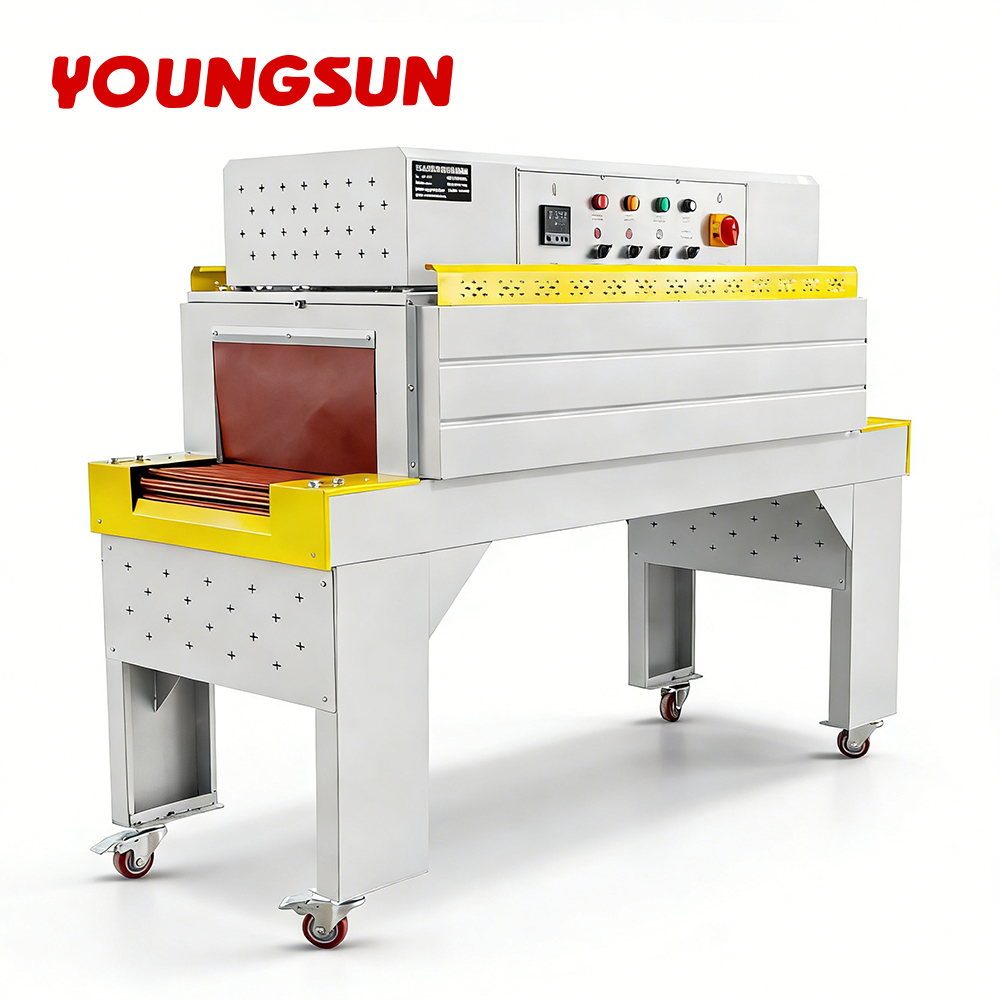
The Insulation Layer: An Undervalued Determinant of Shrink Tunnel Performance
An uninsulated heat shrink radiates roughly 25–35% of its input energy directly into the workspace. That heat serves no packaging purpose — it warms the factory floor, stresses air conditioning, and forces heating elements to work harder. Insulation transforms waste heat into process stability.
How Insulation Defines Shrink Tunnel Behavior
Thermal Efficiency and Operating Cost
A heat shrink machine converts electrical power into heated air that shrinks film around products. In a poorly insulated tunnel, the heating elements cycle on more frequently because heat continuously escapes through the tunnel walls. Each heating cycle consumes a surge of electricity — typically 20–30% more than steady-state operation. Over an 8-hour shift, the cumulative energy waste from frequent cycling adds 15–25% to the electricity cost compared to a well-insulated machine.
Inner circulation heat shrink machines represent the most efficient design. The fully enclosed heating chamber with internal hot air recirculation captures and reuses thermal energy that would otherwise exit through tunnel openings. Temperature stays within ±2°C because the insulated chamber resists ambient changes — critical when packaging areas experience drafts from loading bay doors or seasonal swings. Youngsun's inner circulation models maintain tight temperature control while consuming about 20% less energy than standard open-design tunnels.
Temperature Uniformity and Shrink Quality
Insulation does more than save energy — it directly governs shrink quality. When a heat shrink machine's tunnel walls radiate heat unevenly — hot near the heating elements, cool near the entrance and exit — the film experiences a temperature gradient as it travels through. This gradient causes the film to shrink faster on one face than another, producing the diagonal wrinkles and corner bunching that packaging operators dread.
The insulation layer surrounding the heating chamber acts as a thermal buffer, smoothing out the temperature profile along the tunnel length. Products entering the tunnel encounter a gradual temperature ramp rather than a sharp thermal shock; products in the middle of the tunnel experience consistent heat from all directions; products approaching the exit cool gradually rather than quenching. This controlled thermal profile allows the film to shrink evenly, conforming tightly to product contours without the stress concentrations that create weak spots and poor appearance.
Operator Safety and Workspace Conditions
An uninsulated heat shrink machine running at 160°C exposes nearby operators to surface temperatures of 70–90°C on the exterior tunnel walls. OSHA guidelines for workplace heat stress recommend maintaining work-area ambient temperatures below 27°C, and radiant heat from uninsulated equipment directly raises the operator's perceived temperature beyond the ambient reading.
Thickened stainless steel construction with internal insulation, standard on the PE series heat shrink machines from Youngsun, keeps exterior wall temperatures below 45°C even during continuous operation. The cooler exterior reduces burn risks for operators loading and unloading products, and reduces the workspace cooling load — a secondary cost saving that accumulates with every operating hour.
The Four Insulation Approaches Across Heat Shrink Machine Types
Standard-type heat shrink machines provide basic insulation sufficient for intermittent use and low-to-medium temperature applications (PVC film at 100–130°C). The tunnel body uses a single-layer stainless steel shell with fiberglass insulation between the inner chamber and outer wall.
Hot jet air type machines add adjustable air ducts inside the insulated chamber, directing heated air more precisely onto the product. The combination of insulation and active airflow control shrinks film 30% faster than standard models, with better surface flatness for appearance-critical products like gift boxes and cosmetic sets.
Inner circulation machines take insulation to the maximum: a fully sealed heating chamber recirculates hot air internally, with no direct venting to the outside environment. The insulation wraps the entire chamber in a multi-layer blanket that maintains ±2°C uniformity. These machines suit large-scale processing plants, food factories, and logistics centers where energy cost and packaging consistency drive purchasing decisions.
PE heat shrink machines require the heaviest insulation because PE film demands higher temperatures (200–300°C) and the thicker film needs longer sustained heat exposure to shrink completely. The reinforced insulation and high-power heating system in PE-specific tunnels deliver the thermal energy PE film requires without radiating excessive heat into the workspace.
A Logistics Center's Energy Retrofit
A third-party logistics packaging center operating three standard heat shrink machines on two daily shifts faced rising electricity costs and operator complaints about workspace heat. The three tunnels consumed 42 kW during peak operation, and uninsulated walls pushed the packaging area temperature to 34°C during summer months.
The center replaced one standard machine with a Youngsun inner circulation heat shrink machine as a pilot. The insulated tunnel consumed 18% less electricity per 1,000 packages while maintaining tighter temperature control. The workstation temperature dropped from 34°C to 27°C. Based on the pilot results, the center budgeted replacement of the remaining two machines over the following year.
Frequently Asked Questions
How much energy does tunnel insulation actually save?
Well-insulated inner circulation heat shrink machines consume approximately 20% less electricity than uninsulated standard models processing the same product volume. Annual savings typically recover the insulation premium within 12–18 months at single-shift operation.
Can insulation be added to an existing heat shrink machine?
External insulation blankets can be wrapped around the tunnel body, but effectiveness is limited because the entrance and exit openings — the largest heat-loss paths — cannot be insulated. Retrofitting is rarely cost-effective compared to purchasing a machine designed with integrated insulation.
Does insulated tunnel affect the cooling zone?
Yes, positively. The insulation prevents heat from the heating zone from bleeding into the cooling zone at the tunnel exit. Products enter the cooling phase at a controlled, declining temperature rather than experiencing thermal shock as they exit.
What insulation material is used in heat shrink machines?
Ceramic fiber blankets and high-density mineral wool are most common, rated for continuous exposure up to 350°C. These are enclosed within stainless steel walls and never contact products. Youngsun machines use industry-standard insulation materials rated for long-term thermal stability.
Does insulation affect machine warm-up time?
Insulated tunnels reach operating temperature faster because less heat escapes. An inner circulation machine reaches 150°C setpoint in 8–12 minutes versus 15–20 minutes for uninsulated standard models.
Is thicker insulation always better?
Up to a point. Beyond 50 mm, entrance and exit openings become the dominant heat-loss paths. The most effective approach combines 30–50 mm wall insulation with inner circulation airflow that recovers heat from tunnel openings.
