 EN

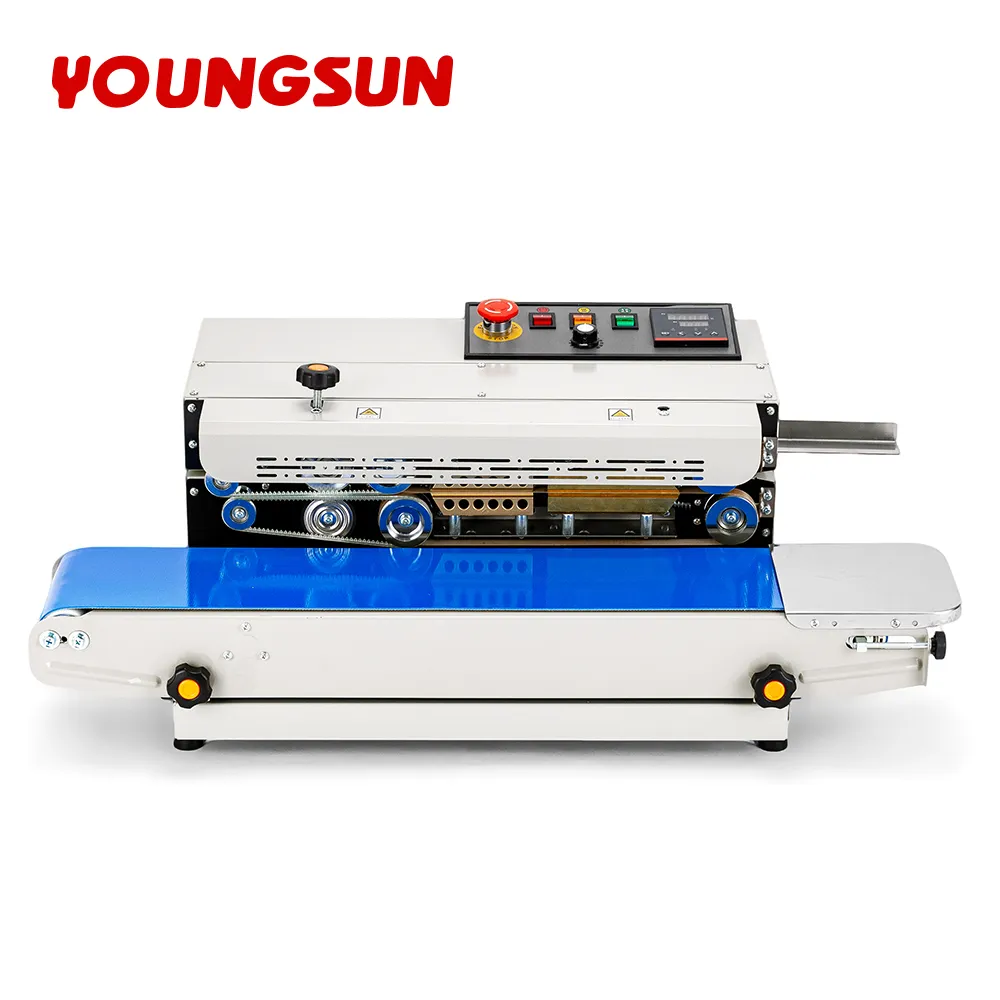
A Run That Outgrew the Tool
A coffee roaster filled 2 kg bags on a table impulse sealer. Two staff sealed about 500 bags a shift, and seals weakened late in the day. Moving to a continuous bag sealer let one person pass 2,000 bags with even welds. The bottleneck shifted to filling. The case shows volume changes the right tool: what fits a startup fails at scale.
Why Batch Tools Stall
Impulse sealers dwell, cool, repeat; output ties to operator pace and fatigue. A continuous bag sealer removes both limits.
Risk Analysis
Operator-Limited Output
Hand sealing caps the line no matter how fast the filler runs.
Seal Variance
Fatigue weakens late-shift welds, leaking product and drawing returns.
Labor Cost
Two people on sealing is hard to justify once volume climbs.
Professional Analysis
Continuous vs Impulse
Impulse seals one bag at a time with cool-down. A continuous bag sealer carries bags through heated bands nonstop, so output scales with belt speed, not rest.
Even Heat Window
Blocks hold steady temperature; the pass length sets dwell. A continuous bag sealer gives the same weld to every bag, unlike a hand tool that drifts with the operator.
Pressure and Set
Bands hold pressure through cooling so seals set flat. Even pressure is why a continuous bag sealer beats hand press.
Authority References
ANSI B11 and ISO 13849 cover nip and heat guarding. NFPA 79 governs drive. OSHA addresses reach and burn. ISO 9001 and ISO 22000 frame food-contact sealing. Youngsun Equipment provides guarding and compliance files per model.
Practical Value
How to Select
Rate speed and throat to bag size and volume. A continuous bag sealer for tall bags needs clearance. Confirm film type.
How to Inspect
Check band tension, block temp, cooling. Log temperature per film. A slipping band wrinkles seals.
How to Use
Set speed to the filler. Train even load spacing. A continuous bag sealer runs best with steady feed.
How to Maintain
Clean blocks, check band wear, lube guides. Plan replacement. A cared continuous bag sealer seals millions.
Frequently Asked Questions
Question: When is a continuous sealer worth it?
Answer: Once volume passes what one or two impulse tools can hold, yes. A continuous bag sealer removes per-bag dwell and fatigue, often quadrupling output per operator. The break point varies by bag size, but the sign is clear: the sealer idles the filler. Below that, a batch tool may still fit a startup budget.
Question: Does a continuous sealer beat impulse on quality?
Answer: For consistency, yes. A continuous bag sealer holds a fixed heat window and even pressure, so every weld matches. Impulse tools drift with operator pace and fatigue, weakening late-shift seals. Quality gain is steadier leaks and fewer returns. Speed and consistency arrive together because the machine sets the weld, not the hand.
Question: What bags suit a continuous sealer?
Answer: Heat-sealable laminates and many PE pouches within the throat size. A continuous bag sealer handles flat and gusseted bags; very small or odd shapes need spacing jigs. Films needing impulse or ultrasonic fall outside the heated-band method. Match film to block temperature for clean welds.
Question: Is a continuous bag sealer safe?
Answer: With guarding, yes. Nip and hot blocks need covers per ANSI B11 and ISO 13849; OSHA addresses reach and burn. A continuous bag sealer should stop on guard open and keep hands from the throat. Train load spacing and never bypass interlocks. Safe running is designed in, not added after a jam.
Question: Can it replace two operators?
Answer: Often yes, and that is the business case. A continuous bag sealer feeds nonstop, so one person loads while the machine seals. Manual sealing needed two just to keep pace with fatigue. Labor drops while output and consistency rise. The freed staff move to fill or pack, lifting whole-line yield.
Question: How to keep output steady?
Answer: Set belt speed to the filler and keep even load spacing so bags do not bunch. A continuous bag sealer logs block temperature; watch the trend for drift. Clean blocks so residue does not transfer. Steady feed and fixed settings hold high volume without surprises, letting the filler set the real pace.
