EN
EN

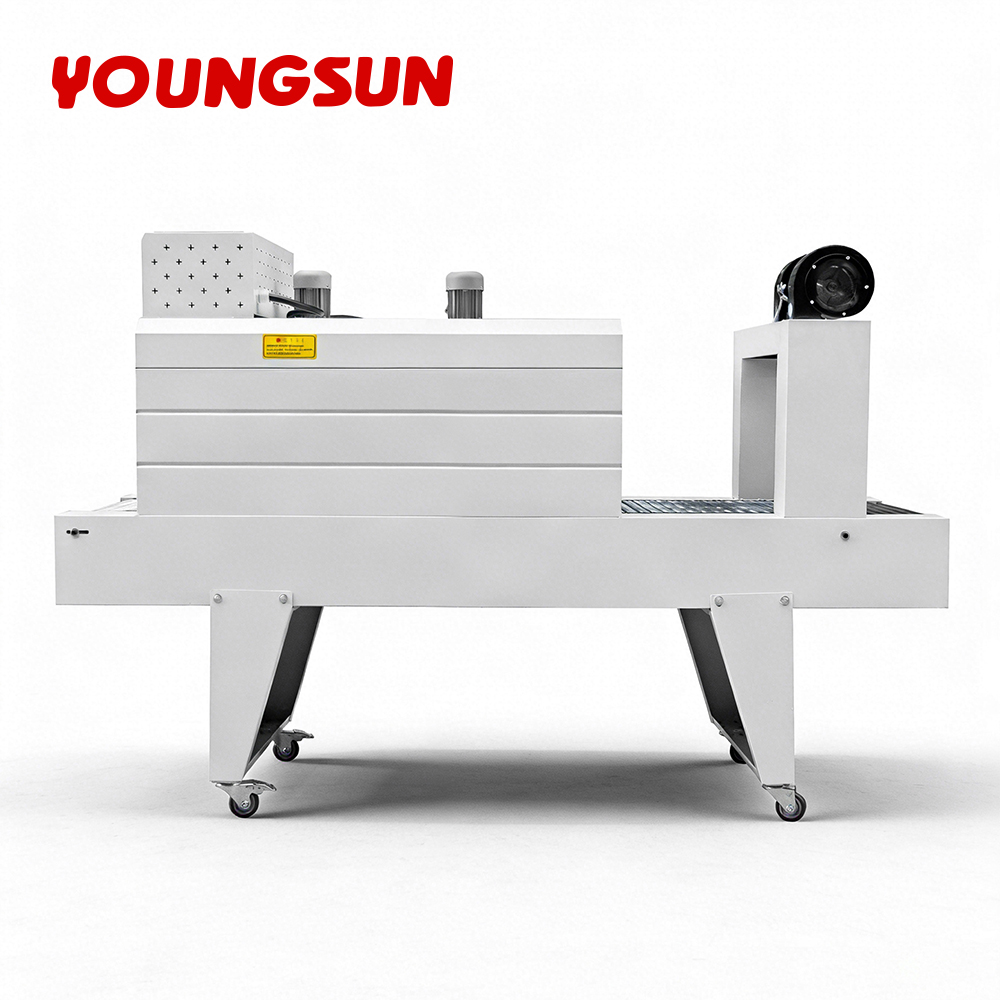
Why Standard Heat Shrink Machines Struggle with Irregular Shapes
Sealing Inconsistency on Uneven Surfaces
Traditional L-bar sealers work best when there's flat, even contact for making good seals. But things get tricky with odd shaped items like those tapered bottles or complex assemblies made from multiple parts. Gaps tend to appear between the sealing part and these curved surfaces. What happens next? Pressure gets distributed unevenly across the seal area. This leads to weak spots that can let air or liquid escape, particularly around those rounded edges where the plastic film just doesn't behave predictably. Packaging plants without some kind of adaptive sealing tech end up dealing with way more rejected packages and all sorts of integrity issues down the line.
Heat Tunnel Gaps and Non-Uniform Shrinkage
Standard heat tunnels just blast out heat across everything without caring about how different parts stick out or sit at various heights. When something has bumps, dips, or stands taller in certain spots, those areas end up in what we call thermal shadow zones where the heat doesn't reach properly. The result? Uneven heating all over the place. Some parts get hot enough to shrink down tight, while other sections stay cool and floppy. This is really noticeable with taller objects. Their top parts don't get as much warm air blowing around them compared to the bottom sections. What happens next? An ugly shelf sag effect that makes products look sloppy instead of professional. Nobody wants their goods displayed like that.
Film Wrinkling, Bridging, and Trapped Air in Complex Geometries
Geometrically complex items—like products with handles, indentations, or asymmetric profiles—expose three core limitations of standard heat shrink machines:
- Bridging: Film stretches across cavities without conforming, leaving unsupported spans
- Wrinkling: Excess film accumulates at concave points due to insufficient directional shrink force
- Air trapping: Pockets of air become sealed before escaping, causing ballooning defects
These issues arise from mismatched airflow patterns and film’s inability to distribute shrink tension evenly across multifaceted surfaces. Polyolefin films compound the problem when tunnel temperatures ignore localized thickness variations across folds.
Critical Heat Shrink Machine Features for Irregular Product Compatibility
Adjustable Sealing Configurations: L-Bar vs. Side Bar for Variable Contours
Standard fixed-seal setups just don't work well when dealing with curved surfaces or oddly shaped products. For these situations, L-bar sealers come into play because they can place seals exactly where needed around those tricky edges. Meanwhile, continuous side sealers handle tapered shapes particularly well, think glass bottles or plastic containers that narrow at the top. The machines with adjustable pressure settings are a godsend for fragile items that might get damaged otherwise. And let's not forget about the modular systems which give operators real flexibility to change how things get sealed on the fly. These adaptable machines cut down on wasted packaging material too, saving somewhere between 15% to 20% compared to older rigid sealing equipment according to what most manufacturers report in their internal studies.
Precision Heat Tunnel Control: Zone Temperature, Conveyor Height, and Directed Airflow
Uniform shrinking demands targeted thermal management:
- Multi-zone temperature control prevents distortion on mixed-material products (e.g., electronics with plastic/metal interfaces)
- Height-adjustable conveyors maintain a precise 2–5 cm gap between heating elements and protruding surfaces
- Directional airflow nozzles actively target cavities and undercuts, eliminating bridging caused by trapped air
Together, these features resolve uneven shrinkage in 97% of complex geometries, as validated in recent packaging trials.
Top 3 Heat Shrink Machine Solutions for Irregular Shapes
ZS-SPL6 Continuous Side Sealer: Modular Design for High-Variability Production
The ZS-SPL6 continuous side sealer handles all sorts of oddball packaging needs thanks to its modular design that lets it switch configurations quickly for different sized products. Workers can tweak things on the fly – adjusting conveyor width from 30 to 300 millimeters, sealing pressure settings, and how tight the film gets pulled across packages, all while keeping production running smoothly. What really sets this machine apart is its side sealing technique which manages to create solid seams even around tricky shapes and curves. No more frustrating air bubbles or flimsy seals that plague old school L-sealers. Running continuously at speeds between 30 to 50 packs per minute, the system stays accurate when dealing with those awkwardly shaped goods we see so much of these days, whether they're auto components or delicate medical equipment where reliability matters most.
L-Bar + Dual-Zone Shrink Tunnel System: Optimized for Polyolefin Film Conformity
The system combines an L-bar sealer with a two-stage shrink tunnel designed mainly for working with polyolefin (POF) films. Zone one gets things started by heating the film between 110 and 130 degrees Celsius, which begins the shrink process in a controlled way. Then comes zone two, running hotter at 140 to 160 degrees, where directed air flows shape the film tightly around tricky areas like corners and raised parts. The separate temperature settings protect items that can't handle too much heat, and those special conveyor belts with holes stop air pockets from forming during processing. Real world testing has shown this setup achieves about 98% wrinkle free results even on complex tetrahedral shapes. That makes it particularly good for delicate electronics packages and certain organic goods that might get damaged by excessive heat exposure.
Optimizing Film and Process Parameters Alongside Your Heat Shrink Machine
POF vs. PE Films: Matching Stretch Recovery to Product Geometry and Shrink Force Requirements
What kind of film we pick really affects how our heat shrink machine deals with all those weird shapes out there. Take polyolefin (POF) films for instance. These bad boys can stretch back much better than regular PE films. We're talking around 50% recovery compared to just 20 to 30% with PE. Plus they apply less shrinking pressure which is great when working with delicate stuff that might break under stress. The way these POF films shrink in multiple directions lets them wrap tightly around complicated shapes without getting air pockets stuck inside. On the flip side, polyethylene (PE) films pack a stronger shrinking punch and resist tears better. That makes them work better for sharp corners or heavier items where things need to stay securely contained. So basically, match what we need to do with what kind of film works best. Go with POF when dealing with fancy curves and angles, but switch to PE when handling boxy, tough to contain products instead.
| Film Type | Shrink Force | Stretch Recovery | Best For |
|---|---|---|---|
| POF | Low (15–30%) | High (≈50%) | Delicate curves, organic shapes |
| PE | High (45–80%) | Moderate (20–30%) | Angular, heavy-duty items |
Aligning film properties with product geometry prevents failure, reduces waste by 25% (Packaging Digest, 2023), and ensures your heat shrink machine delivers consistently wrinkle-free, professional seals.
FAQ
What are the main challenges of using standard heat shrink machines for irregular shapes?
Standard heat shrink machines often struggle with sealing inconsistency, non-uniform shrinkage, and issues like film wrinkling, bridging, and trapped air when dealing with irregular or complex geometries.
How can adjustable sealing configurations benefit irregularly shaped products?
Adjustable sealing configurations, such as L-bar sealers, allow for precise placement of seals, accommodating tricky edges and curves to ensure better packaging integrity.
What film types are best suited for complex product shapes?
Polyolefin (POF) films are preferred for delicate curves and organic shapes due to their high stretch recovery, while polyethylene (PE) films are better for angular and heavy-duty items.