EN
EN

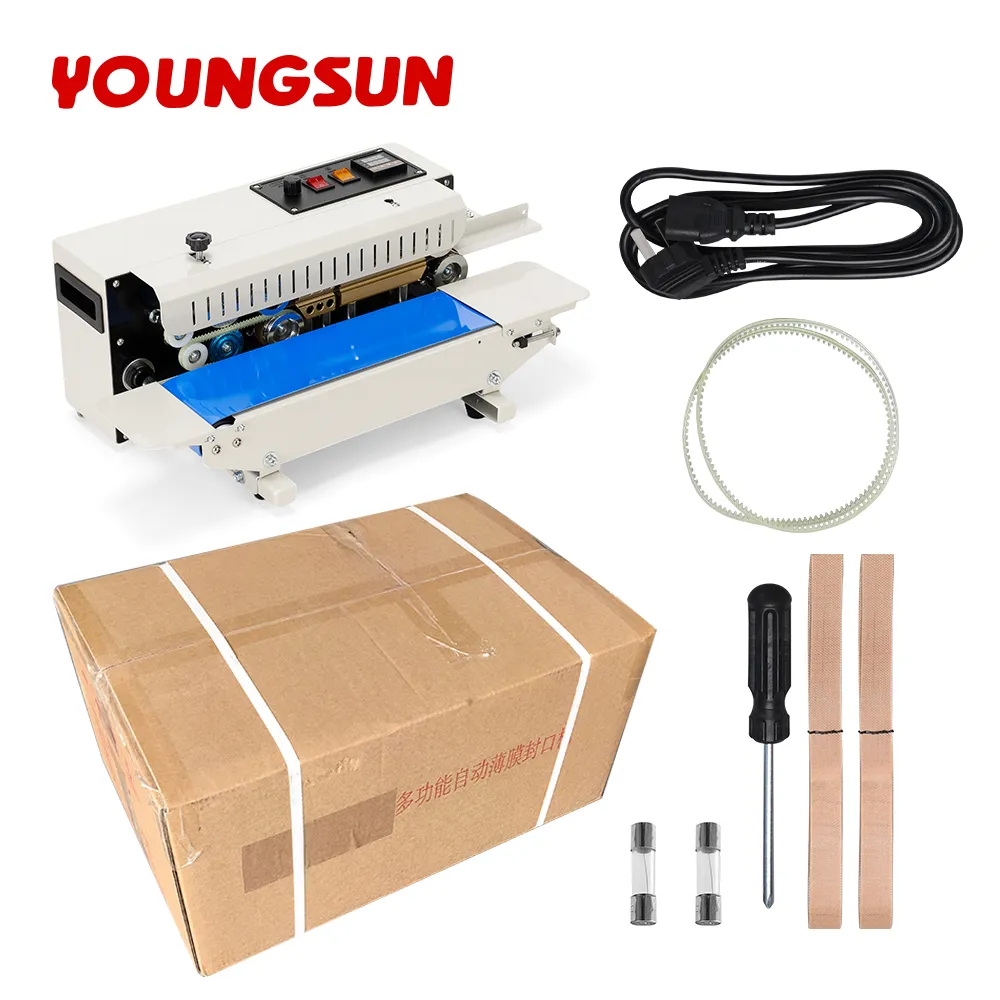
Superior Corrosion Resistance in Demanding Packaging Environments
How Austenitic 304 and 316 Stainless Steel Resist Pitting, Crevice Corrosion, and Chloride Attack
Austenitic stainless steels like grades 304 and 304L provide foundational corrosion resistance in packaging environments, but 316/L variants deliver enhanced protection through 2–3% molybdenum content. This alloying element strengthens the self-repairing passive oxide layer—enabling reliable performance in chloride concentrations up to 2,000 ppm, a critical threshold for seafood or pharmaceutical packaging where salt spray accelerates degradation. Molybdenum specifically inhibits pitting corrosion by suppressing localized acidification at microscopic surface defects, while chromium levels above 16% significantly reduce crevice corrosion risk in overlapping joints common in band sealer assemblies. Crucially, 316L’s low carbon content prevents sensitization during welding, preserving uniform corrosion resistance across heat-affected zones—the most frequent initiation sites for chloride-induced failure.
Real-World Impact: 68% Reduction in Unscheduled Downtime After Upgrading to 316 Stainless Band Sealers
A 22-month field study across frozen food facilities revealed that band sealers with 316 stainless steel frames reduced maintenance interventions by 68% compared to carbon steel alternatives. This translated to 127 fewer production hours lost annually per machine—primarily due to corrosion-related failures such as seized bearings and electrical shorts caused by conductive salt deposits. The upgrade eliminated recurring issues including rust-induced band track misalignment (previously requiring weekly recalibration), pitting-driven coolant leaks in hydraulic systems, and galvanic corrosion at dissimilar metal contacts. Operators reported 43% lower annual maintenance costs and extended service intervals from 250 to 1,500 operating hours. These gains offset the 15–20% material premium within 18 months while eliminating contamination risks from corrosion particles.
Food-Safe Design and Regulatory Compliance for Band Sealers
Meeting FDA 21 CFR 178.3570 and EHEDG Standards Through Seamless Welds and Ra ≤ 0.8 µm Polished Surfaces
Stainless steel band sealers achieve food safety compliance through precision engineering—not just material selection. Seamless welds eliminate micro-crevices where pathogens could accumulate, while surfaces polished to Ra ≤ 0.8 µm prevent bacterial adhesion far more effectively than standard mill finishes. This specification exceeds FDA 21 CFR 178.3570 requirements for food-contact surfaces and fully satisfies EHEDG hygienic design guidelines. Facilities adopting stainless steel band sealers meeting these criteria report 40% fewer contamination incidents—directly attributable to the combination of non-porous material, smooth surface geometry, and weld integrity.
IP69K-Rated Enclosures Enable Effective Sanitary Washdowns Without Compromising Band Sealer Reliability
IP69K-rated stainless steel enclosures are engineered to withstand the high-pressure, high-temperature sanitation cycles essential in food processing. These sealed housings resist 1,450 psi water jets at 176°F (80°C), preventing moisture ingress that commonly triggers electrical failures in lesser-rated equipment. Facilities using IP69K-compliant band sealers maintain 99.2% uptime during daily washdowns—effectively eliminating corrosion-related malfunctions that previously interrupted production. This reliability ensures consistent packaging integrity and eliminates the need for post-washdown diagnostics or component drying protocols.
Chemical Resistance for Consistent Band Sealer Performance Under Aggressive Cleaning Protocols
Withstanding Repeated Exposure to Peracetic Acid, NaOH, and Nitric Acid Without Degradation
In food, pharmaceutical, and chemical packaging environments, band sealers endure aggressive daily sanitation with agents like peracetic acid (PAA), sodium hydroxide (NaOH), and nitric acid. Austenitic stainless steel—particularly 316L—demonstrates exceptional resistance to these chemicals, maintaining structural integrity where carbon steel would rapidly degrade. Independent testing confirms 316L retains 99% of its tensile strength after 500+ cycles of exposure to 15% nitric acid solutions, a benchmark for long-term durability in harsh cleaning regimes. This resilience translates directly to operational consistency: facilities using stainless steel band sealers report 42% fewer maintenance interventions related to corrosion damage versus alternatives, avoiding unplanned downtime costing plants an average of $740,000 annually (Ponemon Institute, 2023). Its non-reactive nature also prevents chemical absorption—critical for maintaining purity in pharmaceutical and organic food packaging. By resisting pitting, stress corrosion cracking, and surface oxidation, 316L ensures band sealers meet FDA 21 CFR 178.3570 and EHEDG hygiene standards without compromising sealing precision or cycle times.
Long-Term Cost Efficiency and Reduced Maintenance for Industrial Band Sealers
Stainless steel construction delivers measurable lifecycle cost savings for industrial band sealers—not through upfront economy, but through sustained reliability. The corrosion-resistant properties of austenitic grades reduce component degradation, slashing replacement part costs by up to 40% compared to carbon steel alternatives. Facilities report 30% fewer unplanned maintenance events after switching to stainless steel band sealers, translating to approximately 200 additional production hours annually. This durability lowers total ownership costs while maintaining peak sealing performance—even under rigorous production cycles. Resilience against chemical cleaners and environmental stressors further eliminates frequent recalibration needs, ensuring consistent throughput with minimal operational disruption. When combined with IP69K sealing, seamless welds, and Ra ≤ 0.8 µm surface finishes, stainless steel delivers a holistic solution that balances regulatory compliance, operational uptime, and long-term value.
Frequently Asked Questions
What is the main advantage of 316 stainless steel over 304 in packaging equipment?
316 stainless steel contains 2–3% molybdenum, which enhances corrosion resistance, especially against pitting and chloride attack. This makes it more suitable for demanding environments like seafood or pharmaceutical packaging.
How does 316L stainless steel perform during aggressive chemical cleaning protocols?
316L stainless steel withstands repeated exposure to chemicals like peracetic acid, sodium hydroxide, and nitric acid without degradation, ensuring long-term durability and reliable performance.
Is upgrading to stainless steel band sealers cost-efficient?
Yes, although the upfront costs are higher, stainless steel band sealers offer long-term savings by reducing maintenance costs, downtime, and component replacements, providing a quick return on investment.
Table of Contents
- Superior Corrosion Resistance in Demanding Packaging Environments
- Food-Safe Design and Regulatory Compliance for Band Sealers
- Chemical Resistance for Consistent Band Sealer Performance Under Aggressive Cleaning Protocols
- Long-Term Cost Efficiency and Reduced Maintenance for Industrial Band Sealers
- Frequently Asked Questions