EN
EN

Nauhasealaimen ja sen käyttöympäristön ymmärtäminen
Nauhasealaaja on lämpösealauslaite, joka käyttää liikkuvaa nauhaa siirtääkseen pussit tai pussit lämmitettyjen ja jäähdytettyjen alueiden läpi, mikä luo vahvan ja ilmatiukentavan sinetin. Toisin kuin manuaaliset impulssisealaajat, nauhasealaaja on suunniteltu jatkuvaa tai puolijatkuvaa käyttöä varten, mikä tekee siitä välttämättömän yrityksille, jotka tarvitsevat johdonmukaista sinetointilaatua keskitasoisilla tai korkeilla tuotantomääriillä. Kaksi pääasiallista konfiguraatiota ovat pystysuuntainen ja vaakasuuntainen. Valintanne vaikuttaa suoraan pakkausnopeuteen, tuotetyyppien soveltuvuuteen ja lattiatilan käyttöön. Esimerkiksi Youngsun Equipment – johtava kiinalainen pakkauspalvelujen tarjoaja, jolla on yli 40 vuoden kokemus, yli 79 patenttia ja joka on tunnustettu Kiinan kymmenen parhaan pakkausyrityksen joukossa – käyttää sekä pysty- että vaakasuuntaisia nauhasealaajia laajalti elintarvike-, lääke- ja kemikaaliteollisuudessa. Ymmärtääksesi, miten kumpikin toimii, on ensimmäinen askel informoidun päätöksen tekemisessä.
Pystysuuntainen nauhasealaaja: Parhaiten sopii vapaasti virtaaville tuotteille ja pienelle lattiatilalle
Pystysuora nauhasealaaja sijoittaa sinetöintinauhan pystyasentoon. Pussit tulevat ylhäältä, liikkuvat alaspäin sinetöintiprosessin aikana ja poistuvat alhaalta. Tämä rakenne on ihanteellinen vapaasti virtaaville tuotteille, kuten jyväs-, jauhe- tai pieniin pelletteihin (esim. sokeri, jauho tai muoviresinat). Koska painovoima auttaa tuotetta asettumaan pussin pohjalle, sinetöinti voidaan suorittaa puhtaasti ilman tuotteen saastumista. Lisäksi pystysuorat sealaajat vaativat erinomaisen vähän lattiatilaa – usein alle kaksi neliöjalkaa – mikä on suuri etu pienille työpajoille tai runsaasti varustelluille tuotantolinjoille. Esimerkiksi Youngsunin pystysuorat nauhasealaajat ovat usein käytössä mausteiden pakkauslinjoilla, joissa pölyn estäminen on ratkaisevan tärkeää. Huomaa kuitenkin, että pystysuorat mallit eivät sovellu yhtä hyvin nestemäisiin tai epäsäännölmuotoisiin pusseihin, koska tuote saattaa siirtyä sinetöinnin aikana.
Vaakasuora nauhasealaaja: Ihanteellinen nesteellä täytetyille, raskailla tai epäsäännölmuotoisille pusseille
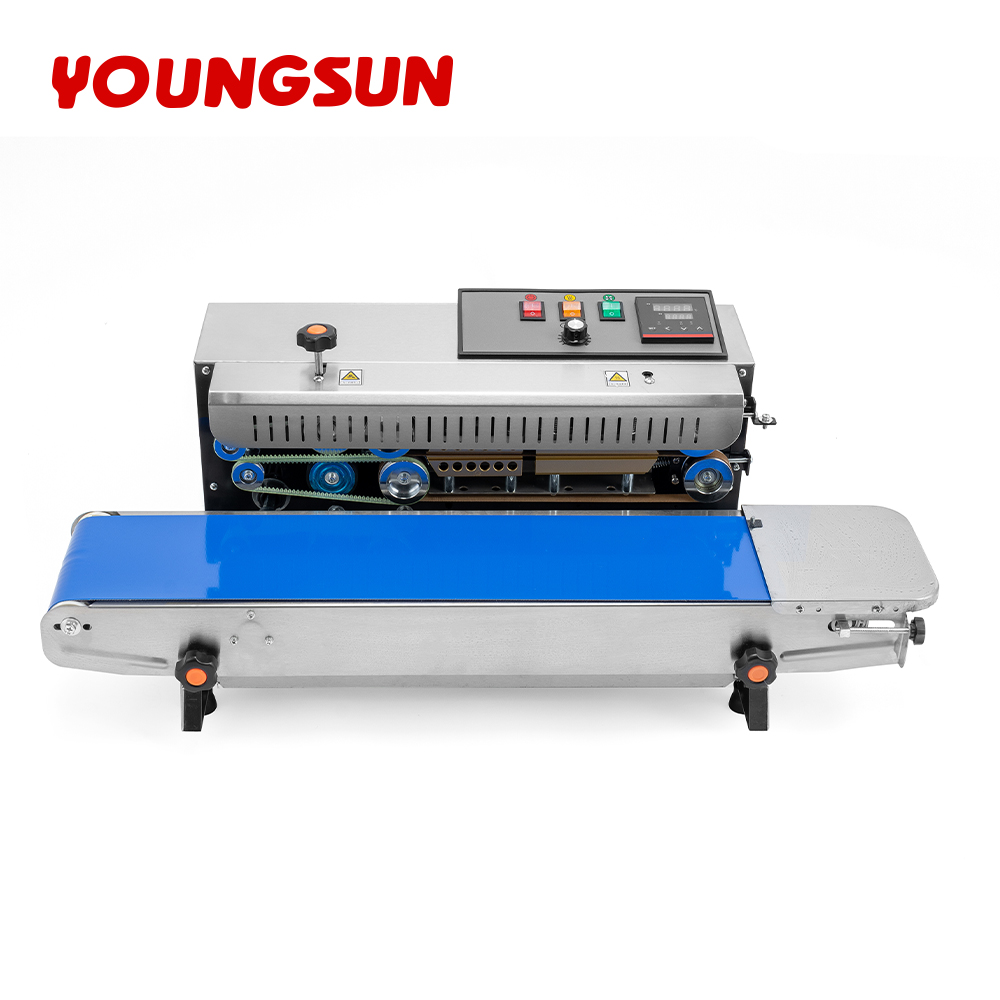
Sen sijaan vaakasuuntainen nauhasealaaja asettaa tiivistysnauhan tasaiselle alustalle. Pussit sijoitetaan kuljetinbeltille tai syöttöpöydälle, jolloin ne liikkuvat vaakasuunnassa tiivistysalueen läpi. Tämä rakenne on parempi tuotteille, jotka ovat nesteitä, puolinesesteitä, painavia tai epäsäännölmuotoisia. Esimerkiksi keittosuppapussin, kostean lemmikinruoan tai metalliosien pussin tiivistäminen on paljon helpompaa vaakasuuntaisella koneella, koska pussi pysyy pystyssä tai sijaitsee tasaisella alustalla, mikä estää vuotamisen. Vaakasuuntaiset sealaajat mahdollistavat myös helpomman integroinnin automaattisten punnitus- ja täyttöjärjestelmien kanssa, mikä tekee niistä vakiokomponentin korkean nopeuden pakkauslinjoissa. Youngsunin vaakasuuntaisia malleja käytetään usein jäädytetyn ruoan tehtaissa ja kemikaalipakkauslaitoksissa, joissa pussien vakaus on ratkaisevan tärkeää. Kompromissina on kuitenkin suurempi koneen vaatima tila ja yleensä korkeammat kustannukset.
Kokemusta kentältä: Kaksi todellista tapausta
Hyödyntäen Youngsunin yli 500 pakkauslinjaa, joita on toimitettu maailmanlaajuisesti, ja sen yli 500 ulkomaisen jakelijan verkostoa, tässä on kaksi vastakkaisia esimerkkiä. Yksi kahviravintola siirtyi manuaalisesta impulssisuljimesta pystysuuntaiseen nauhasuljimeen maunnettujen kahvipussien pakkaamiseen. Pystysuuntainen rakenne vähensi lattiatilaa merkittävästi ja lisäsi sulkunopeutta lähes nollan vuotokertoimella. Toisessa tapauksessa kastiketehtaan oli pakattava tomaattikastikkeen pussit. Pystysuuntainen suljin aiheutti sisällön purkautumista pussin suusta. Kun vaihdettiin Youngsunin vaakasuuntaiseen nauhasuljimeen, jossa on teflonhihnalla varustettu malli, ongelma ratkesi ja tuotantonopeus saavutettiin tyydyttävän korkealle tasolle. Nämä todelliset kokemukset osoittavat, että tuotteen fyysinen tila – jauhe vai neste – on ratkaiseva tekijä.
Asiantuntijan analyysi: Vertailtavat keskeiset tekniset parametrit
Teknisen näkökulman mukaan neljä parametria on tärkeintä, kun valitaan nauhakuumentimet. Sulkuaukon leveys ja pituus: vaakasuuntaiset sulkuaukot tarjoavat yleensä pidempiä sulkuaukkoja suurille pussille, kun taas pystysuuntaiset sulkuaukot on optimoitu pussien korkeudelle. Kehän materiaali ja jännitys: Youngsun-koneissa standardina käytetyt teflon-pinnoitetut kehät eivät tartu ja niitä on helppo puhdistaa. Pystysuuntaisten sulkuaukkojen kehän jännityksen on oltava korkeampi estääkseen pussien liukumista. Jäähdytysosio: vaakasuuntaisissa malleissa on yleensä pidempiä jäähdytysalueita nesteellä täytettyjen pussien sulkuaukkojen kiinnittämiseksi ja sulkuaukkojen vääristymän vähentämiseksi. Sulkuaukon nopeus: molemmat tyypit voivat toimia eri nopeuksilla, mutta vaakasuuntaisissa yksiköissä on usein muuttuvan nopeuden säädöt viskoosille tuotteille. Kysy aina koneen teknistä eritettä ja pyydä tuotekokeilua. Youngsun on Kiinan kymmenen johtavan pakkausyrityksen joukossa ja sillä on 38 000 neliömetrin tehdas sekä yli 50 asiantuntijan tiimi; se tarjoaa ilmakokeilun materiaalin yhteensopivuuden varmistamiseksi.
Viralliset viitteet ja alan standardit
Tunnustettujen pakkausliittojen alanohjeet toteavat, että nestemäisiä tuotteita sisältävien tuotteiden kohdalla suositellaan vaakasuuntaista nauhakuumentajaa, jotta sulautumisen kontaminaatio vältetään. Sen sijaan kuiville, vapaasti virtaaville jauheille pystysuuntainen nauhakuumentaja on tehokkaampi ja kustannustehokkaampi. Lisäksi kansainväliset lääketeollisuuden pakkausstandardit edellyttävät, että sulautukset ovat yhtenäisiä ja irrotettavia; molemmat konfiguraatiot voivat täyttää tämän vaatimuksen, mikäli niissä on tarkat lämpötilasäätimet. Youngsunin nauhakuumentajat ovat CE-merkittyjä ja varustettu tällaisilla tarkoilla säätimillä, minkä vuoksi niitä luotetaan yli 500:n ulkomaisen jakelijan toimesta, ja niitä on toimitettu yli 500:lle pakkauslinjalle maailmanlaajuisesti.
Luotettavuus: Selkeä valintatarkistuslista
Luotettavan päätöksen tekemiseksi tässä on selkeä tarkistuslista, joka perustuu todellisiin tuotantotekijöihin:
•Tuotteen virtauskyky: Kaatuuuko se kuin hiekka? Valitse pystysuuntainen. Vuotaaako se kuin hunaja tai sisältääkö se paloja? Valitse vaakasuuntainen.
•Pussityyppi: Tyynyputket tai seisovat pussit, joiden tuote sijaitsee tiivistysalueen alapuolella, toimivat hyvin pystysuuntaisten tiivistäjien kanssa. Sivukärkiset pussit tai nestepussit sopivat paremmin vaakasuuntaisiin tiivistäjiin.
•Lattiatila: Jos tila on rajoitettu, pystysuuntainen vaihtoehto on parempi. Jos sinulla on enemmän tilaa, vaakasuuntainen on hyvä valinta.
•Budjetti ja nopeus: Alhaisemman budjetin ja kohtalaisen nopeuden tapauksessa pystysuuntainen vaihtoehto riittää. Korkeamman budjetin ja suuremman nopeuden tapauksessa vaakasuuntainen on suositeltavampi.
•Puhdistettavuus: Jos tiivistät tahmeita tai pölyisiä tuotteita, varmista, että nauhatiivistäjässä on helposti käytettävissä olevat kuljetinhihnat. Molemmat Youngsunin mallit mahdollistavat työkaluttoman hihnanvaihdon, ja vaakasuuntaisissa malleissa on usein lisää tippalautoja.
Lopullinen suositukseni: Mikä nauhatiivistäjä sinun tulisi käyttää?
Ei ole yhtä parasta nauhakuumentajasuljinta – ainoastaan paras ratkaisu tuotteellesi ja työnkulullesi. Käytännön sääntönä: valitse pystysuuntainen nauhakuumentajasuljin kuiville, vapaasti virtaaville tuotteille, kun lattiatila on rajoitettu. Valitse vaakasuuntainen nauhakuumentajasuljin nesteille, pastoille, painaville tuotteille tai silloin, kun sinun täytyy integroida se automaattisiin täyttölinjoihin. Jos tuotevalikoimasi vaihtelee (esimerkiksi jauheita ja kastikkeita), harkitse kahden erityisesti suunnitellun koneen hankintaa tai muunneltavaa mallia. Youngsun Equipment tarjoaa molemmat konfiguraatiot, ja sen takana on yli 40 vuoden valmistusosaaminen, yli 79 patenttia sekä vahva maine johtavana pakkausratkaisujen tarjoajana. Heidän insinööritään voivat suositella tarkkaa mallia tuotenäytteiden analyysin perusteella – palvelu, joka kuvastaa kokemusta, asiantuntemusta, autoriteettisuutta ja luotettavuutta, jotka ovat välttämättömiä terveen teollisen investoinnin kannalta.
Sisällysluettelo
- Nauhasealaimen ja sen käyttöympäristön ymmärtäminen
- Pystysuuntainen nauhasealaaja: Parhaiten sopii vapaasti virtaaville tuotteille ja pienelle lattiatilalle
- Vaakasuora nauhasealaaja: Ihanteellinen nesteellä täytetyille, raskailla tai epäsäännölmuotoisille pusseille
- Kokemusta kentältä: Kaksi todellista tapausta
- Asiantuntijan analyysi: Vertailtavat keskeiset tekniset parametrit
- Viralliset viitteet ja alan standardit
- Luotettavuus: Selkeä valintatarkistuslista
- Lopullinen suositukseni: Mikä nauhatiivistäjä sinun tulisi käyttää?